

Moving house is no small thing. You’ve signed the papers, told the family, and maybe already started arranging furniture in your head. But then you open that first cupboard and reality hits. That rice cooker you swore you’d fix, clothes sitting there since 2021, skincare bottles with no lids, random cables for devices you don’t even own anymore. Stuff everywhere, and the quiet dread of having to pack all of it.
What most people don’t realise is that the biggest moving mistake isn’t hiring the wrong mover or starting too late. It’s carrying too much of the old into something new. Extra boxes, extra cost, and a cluttered start in a home that deserved better.
So before the boxes come out, do this first. This is your full guide on what to dispose of before moving house in Singapore, room by room, so the only things that follow you are the ones actually worth keeping.
The 4-Pile Method: How to Decide What Stays and What Goes
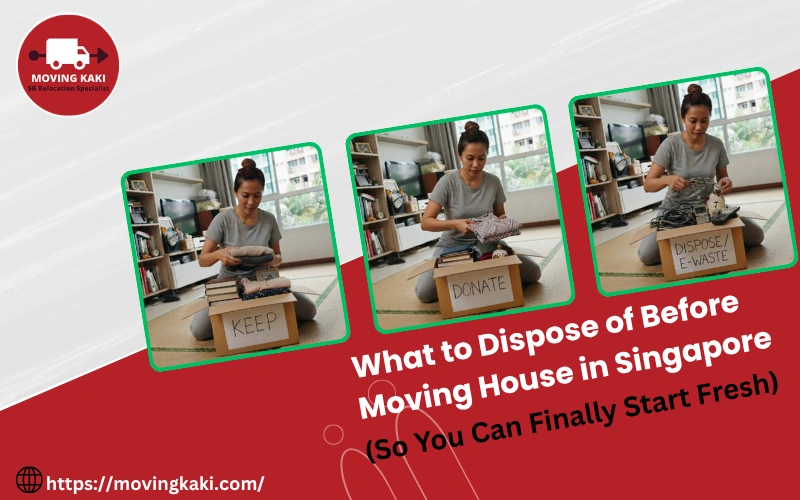
Before you touch a single box, you need a system. Without one, you end up standing in the middle of a room holding something for ten minutes, putting it back down, and moving on without deciding anything. This is one of several decluttering strategies that work, and it is the simplest place to start:
- Keep: Things you use regularly and actually need in your new place. If you have to think too hard about whether it belongs here, that is your answer.
- Donate: Items in good condition that someone else could use. Clothes, books, furniture, and kitchen equipment. If it works and it is clean, pass it on.
- Sell: Things with real value you no longer want. List these a few weeks out because buyers take time, and the truck waits for no one.
- Throw Away: Broken, expired, or damaged beyond any practical use. If it cannot be donated or sold, it goes without hesitation.
Work through one room at a time and decide on every item before moving to the next. The method only works when you commit to it fully, and nothing motivates that quite like knowing the moving truck is coming regardless.
If packing feels overwhelming after all that sorting, Moving Kaki provides expert packing and unpacking services so every item is wrapped, labelled, and ready to go without you lifting a finger.
What to Get Rid of Before Moving House in Singapore: Room by Room
Every room in your home is hiding things you no longer need. The trick is knowing what to look for before the boxes come out. Go through each space below, be honest, and you will be surprised how much lighter your move becomes.
1. Bedroom
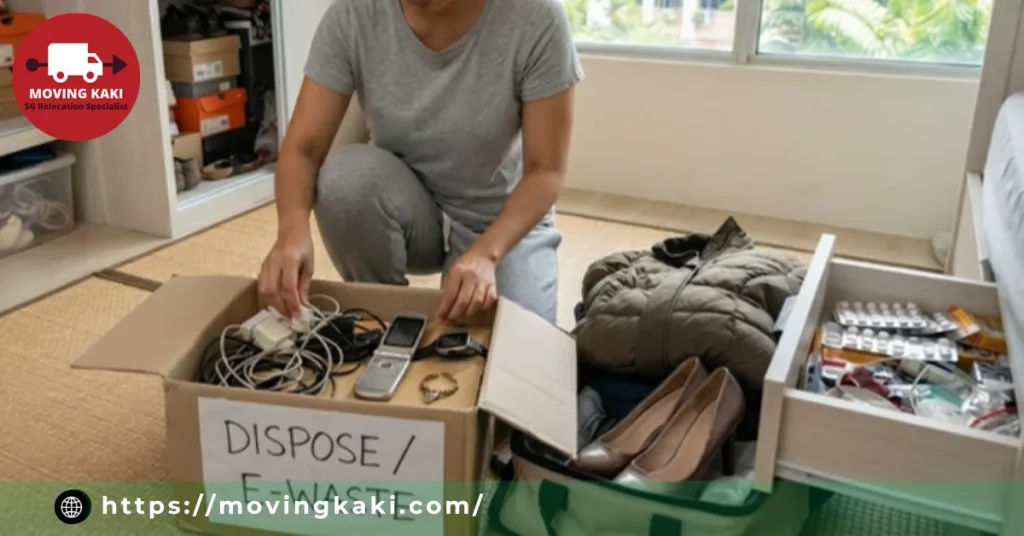
The bedroom feels personal, which is exactly why it is the hardest room to sort through. Start with your wardrobe. In Singapore’s heat, there is no reason to hold onto thick jackets, unworn formal wear, or shoes that have not left the shelf in over a year. Move to your drawers and under-bed storage next; both tend to become a permanent holding place for things people fully intend to deal with someday. Someday is today. Look out for:
- Clothes and shoes not worn in the last twelve months
- Broken jewellery, tangled chargers, and cables for devices long gone
- Expired medication or supplements kept in bedside drawers
- Random items that never really had a proper place to begin with
2. Bathroom and Vanity
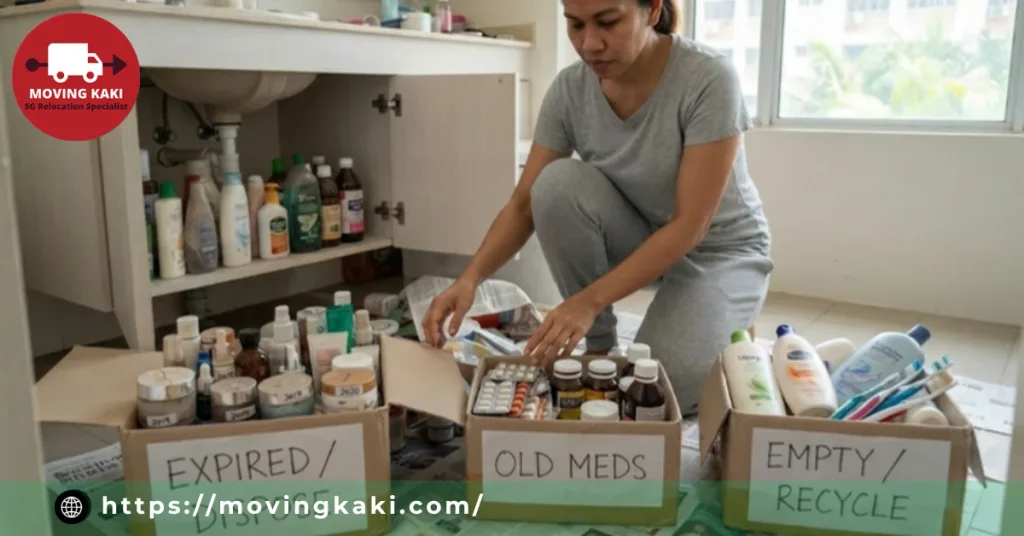
Bathrooms look small but hide a surprising amount of stuff that expires and sits there anyway. Pull everything out from under the sink, inside the cabinet, and off the shelves. Most people find skincare products and medicines that went off years ago still sitting exactly where they left them. Clear out:
- Expired skincare, serums, and creams past their best
- Old medication and supplements beyond their use-by date
- Half-used products you stopped reaching for months ago
- Cracked containers, worn toothbrushes, and bottles that have been nearly empty for longer than you can remember
3. Kitchen
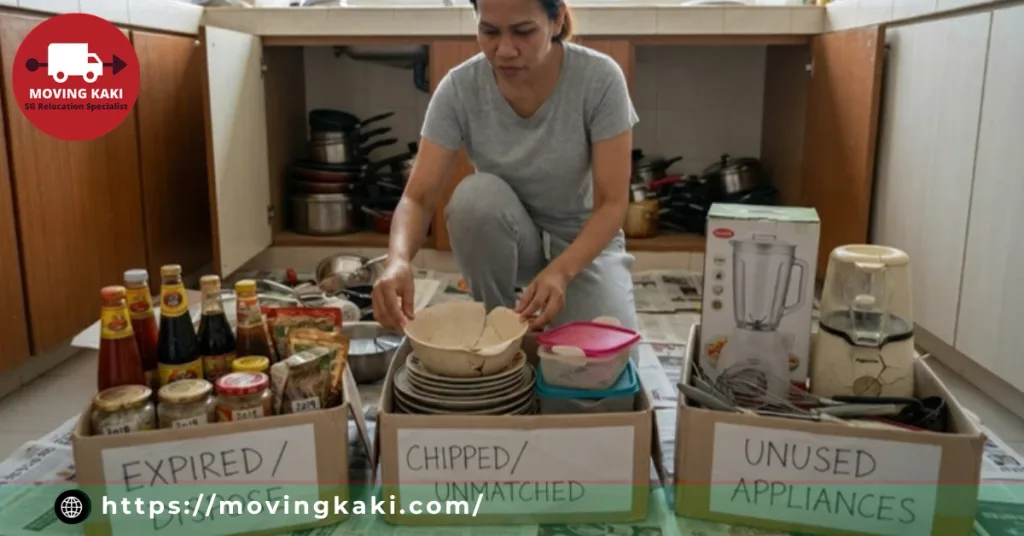
The kitchen is where things pile up without anyone really noticing. Start with the pantry, pulling out every tin, jar, and packet to check the dates. Then work through your cookware and appliances. Kitchen items are heavy, and heavy means costly on the day, so do not give clutter the benefit of the doubt here. Dispose of:
- Expired sauces, condiments, and pantry items are open far too long
- Chipped plates and Tupperware containers are missing their lids
- Duplicate utensils you never actually reach for
- Appliances still in the box or too broken to be worth moving
4. Living Room and Store Room
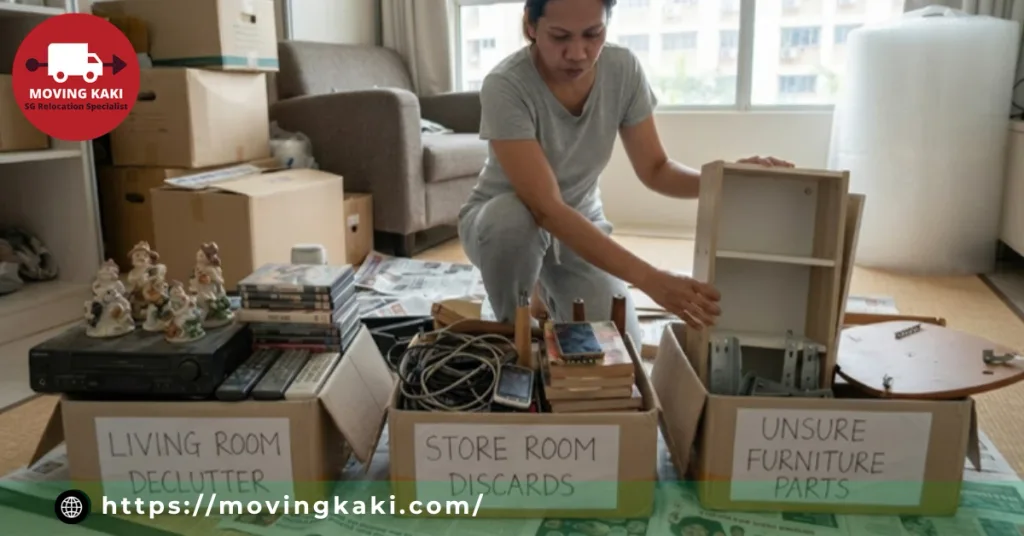
The living room collects things so gradually that you stop seeing them. The store room is a different story altogether. For many homes, it is where belongings go and simply never come back out. Boxes unopened since the last move, tools with no clear purpose, furniture parts for furniture that no longer exists. Go through both spaces and clear out:
- Old remote controls for devices you no longer own
- Decor and knick-knacks you stopped liking long ago
- Books, DVDs, and gadgets replaced by streaming and smartphones
- Anything in the storeroom you have no real use for anymore
For furniture pieces you are unsure about, this guide on how to dispose of unwanted furniture in Singapore breaks down every option available to you.
How to Dispose of Items the Right Way in Singapore
Getting rid of things is not as simple as throwing everything in a bin bag. Singapore has specific ways to handle different items, and knowing them means nothing useful ends up wasted, and nothing gets dumped in a way that causes problems later.
1. Donate to Local Charities
If something still works and looks decent, someone else can use it. Plenty of organisations accept furniture, clothing, books, and household items, and many will arrange collection if you cannot drop things off yourself. Sort donations out early so it does not become something you are scrambling to handle at the last minute:
- Local welfare organisations and family service centres for furniture and household goods
- Food donation drives for unopened, non-expired pantry items
- Clothing donation bins in Singapore found in most HDB estates and community centres
- Online community groups where neighbours can claim items directly from you
2. Sell What Still Has Value
Before you pack something you no longer want, check if it is worth listing first. Secondhand items move quickly when priced fairly, and even a few extra dollars back in your pocket makes the effort worthwhile. Give yourself at least two to three weeks before the move so everything is settled before the real chaos begins:
- Secondhand marketplace apps for smaller items, clothes, and appliances
- Online groups and forums for furniture and larger household pieces
- Neighbourhood chat groups where collection is fast and local
3. Recycle Electronics and E-Waste
Old phones, laptops, cables, printers, and small appliances cannot go into the regular bin. There are collection points specifically for this, and they are not hard to find:
- E-waste bins at major shopping malls and community centres across the island
- Collection points at telco stores and electronics retailers
- National Environment Agency scheduled e-waste drives in your neighbourhood
4. Dispose of Bulky Items Through Your Town Council
Large furniture pieces should be disposed of through your Town Council’s bulky item removal service rather than being left in common areas, as illegal dumping may result in penalties. Many HDB Town Councils offer complimentary or low-cost bulky item removal for residents, although the number of items, eligibility, and collection arrangements vary. These services are generally intended for routine household disposal rather than full house-moving clear-outs.
- Check your Town Council’s website or app for the latest bulky item disposal guidelines and submit a collection request if required.
- Only place items at the designated collection location and time specified after your booking has been confirmed.
- Condo residents should check with their management office, as disposal procedures and fees vary between developments.
If coordinating collection feels like one more thing on an already long list, Moving Kaki’s disposal service can handle bulky items and unwanted furniture as part of your move, so everything gets cleared in one go.
Conclusions
Moving house is one of those rare moments where you actually get a clean slate. New place, fresh start, and a real chance to only bring what belongs in the next chapter.
What you leave behind matters just as much as what you take. Every item cleared out before the move is a box you never had to pack, a decision you never had to make under pressure, and space you never had to find in a home that deserved better.
Go room by room, be honest about what you actually use, and let the rest go. The lighter you move, the better it feels when you walk through that door.
And if you need help with the move itself, Moving Kaki, a local moving company in Singapore, provides expert house moving, packing, disposal, and storage services. Get in touch today to get a free quote and make your move smooth from start to finish.
FAQs
1. How early should I start disposing of things before moving house?
Four to six weeks out is the right window. That gives you enough time to sell items properly, arrange donations, and book bulky item collection through your town council without any last-minute pressure. When disposal gets left too late, things get rushed, dumped the wrong way, or end up on the truck simply because no decision was made.
2. Can I leave unwanted items outside my HDB block for others to take?
No, and it is worth understanding why. Leaving items in common areas like void decks, lift lobbies, or corridors goes against HDB regulations and can result in a fine. Passing things on the right way means using online community groups, donation drives, or arranging a bulky item collection through your town council so everything is handled the right way without any unnecessary back and forth.
3. What items are movers in Singapore not allowed to transport?
Most professional movers will not carry flammable items like gas canisters, paint, or lighter fluid, hazardous chemicals, or perishable food. These need to be disposed of or transported separately before the truck arrives. Check with your mover a week or two ahead so nothing gets flagged on the day and throws the schedule off.
4. Is it worth hiring a disposal service, or should I do it myself?
For a few bags of general waste and small items, handling it yourself through recycling points and town council collection works fine. If you have multiple bulky furniture pieces, old appliances, and a tight timeline though, a professional disposal service takes the whole job off your hands in one visit. For bigger clear-outs, the cost is usually well worth it. And if you need somewhere to keep things temporarily while you figure out what to do with them, Moving Kaki also offers storage solutions to keep your belongings safe between moves.
5. What if my new home is smaller? Should I dispose of furniture before or after moving?
Before, without a doubt. Measure your new space first and see what actually fits. Anything too large, mismatched to the new layout, or likely to crowd a smaller home should go before you have confirmed your moving date. Moving furniture in only to arrange disposal all over again on the other end takes more time and leaves you starting off surrounded by a problem you could have solved earlier.


