

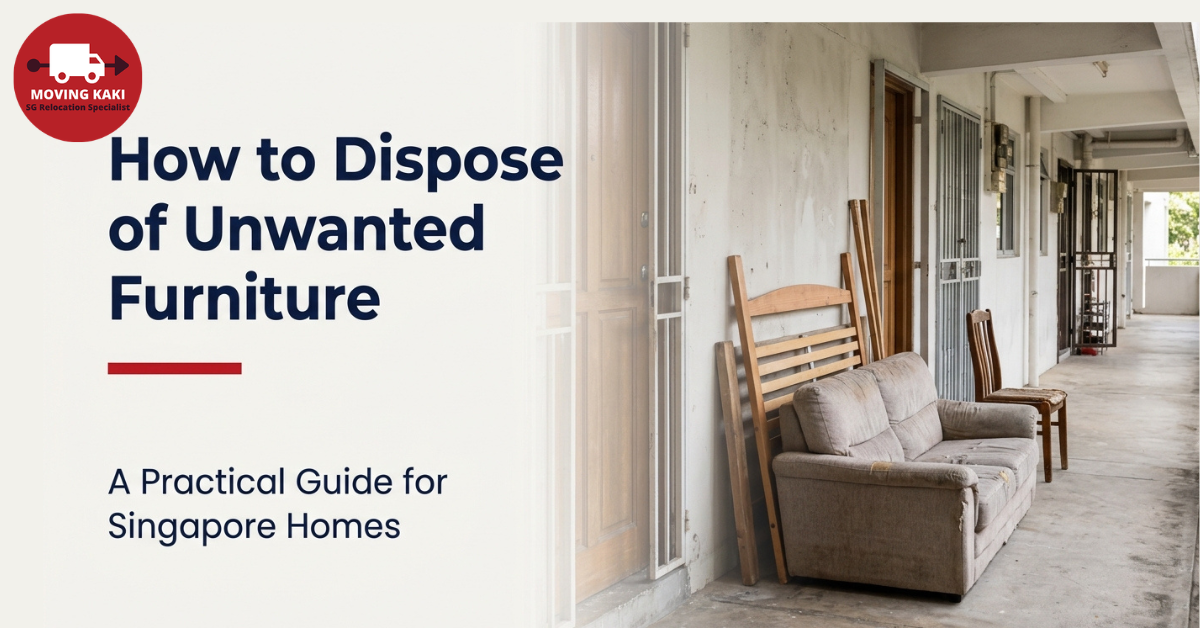
The sofa doesn’t fit the new living room, the bed frame has a cracked slat, and the old wardrobe won’t come apart without a screwdriver and an afternoon. You can’t leave any of it at the void deck, and the town council won’t take it if it’s part of a house move.
This guide explains how to dispose of unwanted furniture in Singapore: which options are free, which ones cost money, how to choose a disposal service, and why dumping furniture can end in a fine of thousands of dollars.
Furniture Disposal Options in Singapore at a Glance
1. Use Your Town Council’s Free Bulky Item Removal
If you live in an HDB flat, your town council may collect bulky items for free. The rules differ between town councils, so always check yours. At Nee Soon Town Council, for example, the service is free for up to three bulky items a month, booked at least three working days ahead.
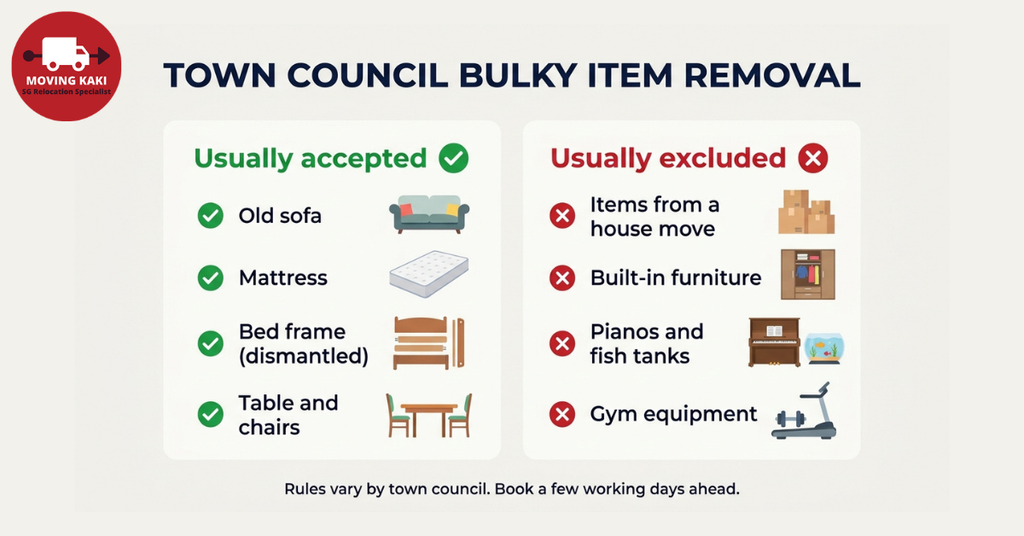
There are conditions that catch many people out:
- House-moving items are usually excluded. If you’re clearing furniture because you’re moving, the town council may decline the request.
- Built-in furniture is excluded, such as kitchen cabinets and built-in wardrobes.
- You may need to dismantle large items yourself so they fit through the door and lift.
- Workers usually don’t enter your flat. Items go outside your unit shortly before collection.
- Fragile items, pianos, fish tanks and gym equipment are often not accepted.
The service works well for one old sofa or mattress. For a full house clear-out before a move, you’ll need another option.
2. Sell Furniture That Still Has Value
A solid wood table, a good office chair or a sofa in clean condition can still sell. List it on Carousell or Facebook Marketplace with clear photos, measurements and your collection area. Price it to move if your moving date is close.
Start three to four weeks before you move. Buyers often reschedule, and the item has to be gone before your movers arrive.
3. Give It Away or Donate It
If an item won’t sell, offer it free in neighbourhood groups or to friends and family. People will usually collect a free item quickly.
Some charities and thrift shops accept furniture, but many no longer take large items or collect from homes. Call before you drop anything off, and only donate furniture that is clean and works. Broken items left at donation points become the charity’s disposal problem.
For smaller items, our list of places to donate clothes in Singapore includes options that take clothes and household goods.
4. Ask About Retailer Take-Back
When you buy a new sofa, mattress or bed frame, ask whether the shop will remove the old one on delivery. Some furniture retailers offer this, sometimes for a fee. It’s often the simplest option, because the old item leaves on the same trip the new one arrives.
5. Hire a Professional Disposal Service
A disposal service is the practical choice when you have several items, broken furniture, built-in pieces, or a moving date to meet. The crew carries everything out of your home, dismantles what needs dismantling and takes it away in one trip.
It’s especially useful before a move. Every item you get rid of beforehand is one less to pack, carry and pay to transport. Book at least a week ahead, and earlier at month-end, when many moves happen.
You can book our furniture disposal services in Singapore on their own or on the same day as your move.
How to Choose a Furniture Disposal Service
Not every company that offers to take your furniture away disposes of it properly. Check these four things before you book.
1. Licensing and Proper Disposal
Ask where your furniture will go. A proper service takes it to a licensed facility or a recycling partner, not a quiet roadside. If a company dumps your items illegally, the trail can lead back to the job.
2. Clear, Upfront Pricing
Disposal is usually priced by item size, quantity and access, such as stairs or no lift. Ask for a written quote that lists every item and any extra charges for dismantling or carrying. Compare at least two or three quotes, and compare what’s included, not just the total.
3. Reuse and Recycling
Ask whether they donate or resell usable furniture, and whether they recycle wood and metal. A service with recycling partners keeps more of your furniture out of landfill.
4. Reviews and Track Record
Read recent reviews on Google and Facebook. Look for comments about on-time arrivals, careful handling in lifts and corridors, and no surprise charges.
Still deciding whether to do it yourself? Our guide to DIY vs professional disposal compares the cost, effort and risk of each.
Never Dump Furniture Illegally
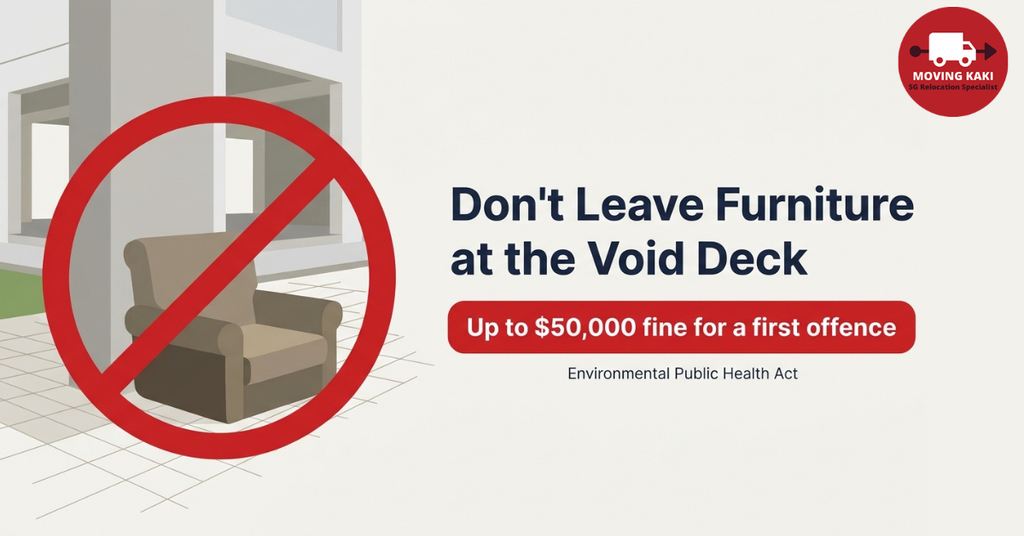
Leaving furniture at a void deck, a bin centre or a roadside without arrangement is illegal dumping. Under the Environmental Public Health Act, a first offence can mean a fine of up to $50,000, up to 12 months in jail, or both.
The courts do use it. In May 2026, NEA fined a driver $8,000 for dumping office furniture along Joo Yee Road. If you hire someone to take your furniture away, make sure they’re a proper company that tells you where it goes.
Why Proper Disposal Matters
Furniture that goes to landfill takes up space Singapore doesn’t have. Semakau, the country’s only landfill, is projected to run out of space by around 2035 at current waste rates.
Much of that furniture doesn’t need to be there. Solid wood, metal frames and working pieces can be reused or recycled. Older items can also contain foam, glue, paint and treated wood that are better handled properly than dumped. Selling, donating, and choosing a recycling service keep usable materials in use longer.
How to Dispose of an Old Sofa, Bed Frame or Mattress
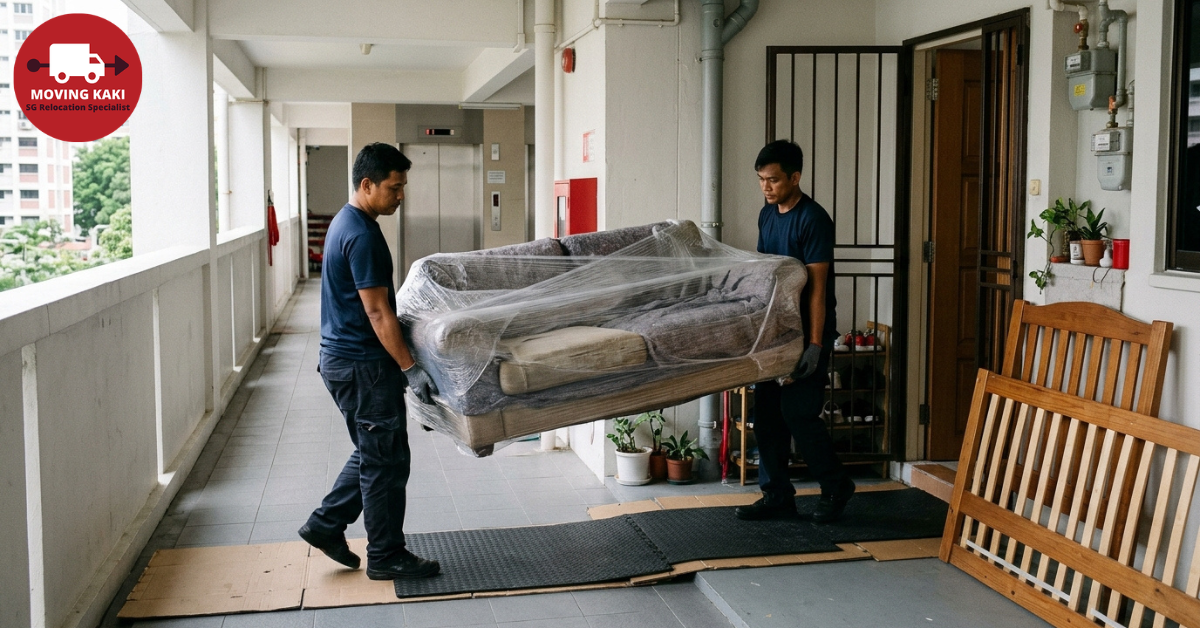
These three cause the most trouble because of their size.
- Sofa: sell or give it away if it’s clean and sturdy. If it’s worn or torn, use the town council service if you’re not moving, or a disposal service if you are.
- Bed frame: metal frames can often be recycled. Dismantle it first and keep the screws together if someone else will use it.
- Mattress: few people buy used mattresses, so the realistic options are town council removal, retailer take-back when you buy a new one, or a disposal service.
Conclusion
The right way to dispose of unwanted furniture in Singapore depends on how much you have and when it needs to go. For one or two items, use your town council’s free service. Sell or give away anything still in good condition. If you’re moving or clearing a whole home, hire a licensed disposal service and book at least a week ahead.
Whatever you choose, don’t leave furniture at the void deck.
If you’re clearing out before a move, our furniture movers in Singapore can move what you keep and remove what you don’t on the same day.
Frequently Asked Questions
Where Can I Throw Away Furniture for Free in Singapore?
HDB residents can use their town council’s bulky item removal service, which is usually free for up to three items a month. Book a few working days ahead and check the rules, since items from a house move are often excluded.
Can I Leave Old Furniture at the Void Deck?
No. Leaving furniture at a void deck or bin centre without arrangement counts as illegal dumping. A first offence can lead to a fine of up to $50,000.
Will the Town Council Take Furniture When I Move House?
Usually not. Many town councils exclude house-moving items from their free service. For a move, sell or donate what you can and hire a disposal service for the rest.
How Much Does Furniture Disposal Cost in Singapore?
It depends on the number and size of items and access at your block, such as stairs or no lift. Get a written quote that lists each item and any dismantling charges.
How Far Ahead Should I Book a Disposal Service?
At least a week ahead, and earlier at month-end or before public holidays, when moves peak. If you’re moving, book disposal for a day or two before the move so the movers have less to carry.


