



Your piano has been through a lot with you. It sat in your living room for years, filling the house with music at family gatherings. Your child practised scales on it every evening after school. Whatever the story behind it, one thing is certain. This isn’t just furniture. It’s something you genuinely care about.
So when moving day comes, the last thing you want is to watch it get scratched, dropped, or damaged because someone didn’t handle it right. What most people don’t realise until it’s too late is that moving an upright piano and moving a grand piano are two completely different jobs. Different weight, different risks, different equipment, different crew size. Treating them the same way is where things go wrong.
And in Singapore, the stakes are even higher. Tight HDB corridors, narrow lift openings, condo management rules. The logistics can catch you off guard fast. This guide covers the key differences between upright piano vs grand piano moving, what makes each one uniquely challenging, and what to look for when choosing the right team, so you’re not holding your breath the entire move.
Moving an Upright Piano in Singapore: What to Expect
Upright piano moving might seem straightforward compared to a grand, but manageable doesn’t mean easy. Plenty of moves go wrong simply because people underestimate what’s involved.
Getting the Piano Ready
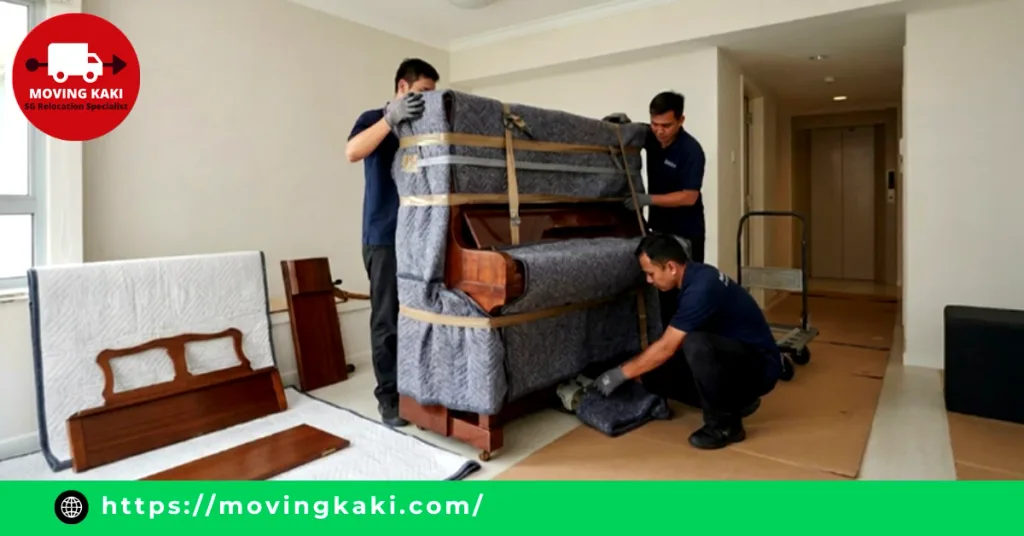
Before anything moves, the piano needs to be prepped. The keyboard lid gets closed and secured, the pedals are wrapped, and the entire body gets covered in thick moving blankets to protect the finish. Any loose parts like a music stand or detachable panels are removed and packed separately. Skipping this is how pianos come out of a move with scratches and dents.
Most piano damage happens before the truck even moves. Find out exactly what to do beforehand in our guide on how to prepare your piano for moving day.
Navigating the Buildings
HDB lifts are notoriously tight, with some openings as narrow as 80 cm. Most upright pianos are around 60 to 65 cm deep, which means there’s very little room for error once the piano is on the dolly and heading toward the lift.
Older HDB blocks without lift access on certain floors mean the piano has to go up or down the stairs entirely by hand. Condos often require advance booking of the service lift and written approval from management before the move can begin. A good moving company will handle all of this, but knowing it upfront helps you plan your moving day without surprises.
The Actual Move
The team uses a heavy duty piano dolly to roll the piano carefully through the unit, into the lift or down the stairs, and into the moving truck. Inside the truck it gets secured upright with straps so nothing shifts during the drive.
At the destination the team navigates the new building, gets the piano into position, removes the blankets, and checks everything over before they leave.
After the Move
Give the piano at least two to three weeks to settle before calling a tuner. Singapore’s humidity and air conditioning levels differ a lot from home to home, and the piano needs time to adjust before a tuning will actually hold. Rushing this means paying for a tuning that won’t last.
Moving a Grand Piano in Singapore: What to Expect
Grand piano moving is a serious operation. The weight, the size, the disassembly, the equipment, none of it leaves room for shortcuts. Done wrong, it puts the piano at risk and the people moving it too.
Taking the Piano Apart

A grand piano cannot be moved in one piece. The legs come off one by one, the lid gets removed, and the pedal unit is detached and wrapped separately. Each part gets padded individually before anything leaves the room. Taking apart a grand piano properly can take 30 to 45 minutes on its own. Cut that time short and damage becomes very likely.
Getting the Body Out
With the legs off, the main body gets carefully tilted onto its side and lowered onto a specialised skid board. This is the most physically demanding moment of the entire move and the one that needs the most coordination between the crew. One wrong move during the tilt can damage the internal action, crack the soundboard, or hurt someone. There’s no room for guesswork here.
What Makes This Move Harder
Most condo and HDB lifts are too narrow to fit a grand piano body even when it’s on its side. The moving team has to find another way in, sometimes through a car park, a back entrance, or an external stairwell.
For high-floor condos and landed properties without suitable ground-level access, a crane or hydraulic hoist is the only option. You’ll see this more often in areas like Sentosa, Bukit Timah, and Marina Bay where grand pianos are more common. Building management needs to be notified well in advance, and some buildings require a permit before any equipment gets set up outside.
Reassembly at the New Location
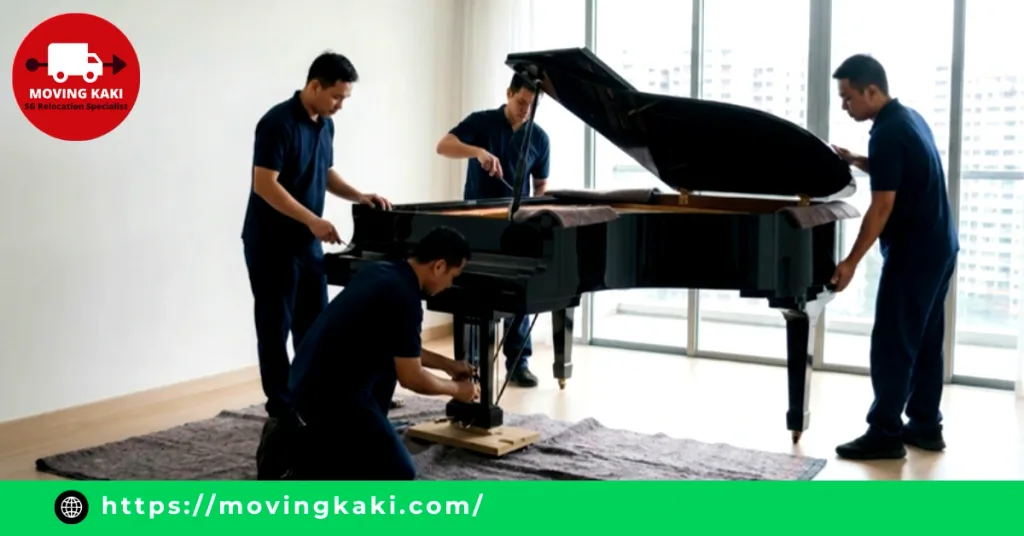
At the destination, the body comes off the skid board and gets lifted back upright. The legs go back on one by one, followed by the lid and pedal unit. Before the team leaves, every part gets looked over to make sure nothing was knocked loose or damaged during the move.
After the Move
A grand piano almost always needs piano tuning after a move. The disassembly, the journey, and the reassembly all affect the pitch. Give it at least three to four weeks to adjust before booking a tuner. Humidity levels vary quite a bit depending on where you live and what type of home you’re moving into, and a piano that hasn’t settled will lose its tune fast. Some grand pianos need two sessions before they sound right, especially after a long or complex move.
Want to know more about what safe piano handling actually looks like? These safe piano handling techniques break down the process in more detail.
Upright vs Grand Piano: Moving Costs and Differences at a Glance
Before diving into the detail, here’s a clear side by side view of what separates these two moves.
| Factor | Upright Piano | Grand Piano |
| Weight | 100 to 250 kg | 270 to 550 kg |
| Disassembly needed | No | Yes |
| Time to complete | 1 to 2 hours | 3 to 5 hours |
| Team size required | 2 to 3 movers | 3 to 4 movers minimum |
| Crane or hoist needed | Rarely | Sometimes |
| Post-move tuning needed | Recommended | Almost always |
| Average cost | SGD 150 to 350 | SGD 400 to 900 |
Pricing depends on several factors beyond just piano type, and the piano moving cost guide for Singapore breaks down exactly what drives the final quote.
How to Choose the Right Piano Mover in Singapore
Not every moving company is equipped to handle a piano. A general mover and a trained piano mover are very different, and getting that wrong is expensive.
Look for a company that specialises in piano moving, not one that picks it up here and there. They should visit the space before giving you a price. Anyone quoting without seeing the piano and the building in person isn’t giving you a real number.
Check that they carry insurance covering your piano during the move and look for genuine reviews from customers. An unusually low quote almost always means corners are being cut somewhere.
If you’re looking for a team that handles piano moving the right way, Moving Kaki is one of the professional Piano Movers in Singapore, with a track record of handling exactly what upright and grand piano moves involve. From the site assessment to the final placement, they handle every step with the right equipment and the right people.
A damaged piano can cost thousands to repair. The right team is worth it.
Conclusion
A piano isn’t something you just move. It’s something you protect.
Whether you own a compact upright or a full grand, the moving process is more involved than most people expect. Different weight, different equipment, different challenges, and in tight HDB corridors and high-rise condos, even more to plan around.
You’ve read through everything. You know what kind of move you’re dealing with, what it takes, and what to watch out for. Now the only thing left is finding the right team to get it done.
This isn’t the kind of job where good enough is good enough. Get in touch with Moving Kaki today for a free site assessment and an honest quote. We’ve moved pianos all across Singapore and every single one gets the same level of care.
FAQs
1. Can a piano be moved in the rain?
It’s strongly advisable to avoid moving a piano during heavy rain. Moisture can seep into the wooden body, warp the soundboard, and damage the internal components. If your moving date falls during the monsoon season, make sure your mover has proper waterproof covering and a covered truck.
2. How soon can I play my piano after moving?
You can play it immediately after the move but it won’t sound its best until it’s been tuned. Wait at least two to three weeks before tuning so the piano has time to adjust to the humidity and temperature of its new space.
3. Do I need to inform my condo or HDB before moving a piano?
Yes. Most condos require advance notice of at least 48 hours and written approval to use the service lift. Some HDB blocks have specific rules around large item moves. Always check with your building management before moving day.
4. Will moving damage my piano?
Not if it’s handled by a trained team with the right equipment. The most common causes of damage during a move are improper wrapping, untrained movers, and rushing the process. A professional piano mover will ensure everything is secured and handled correctly from start to finish.


