

Space is tight in Singapore. Whether you live in a 4-room HDB, a condo, or run a small office, it often feels like there’s never enough room. This becomes even more challenging during home or office moves, when you may need a temporary place to store furniture, equipment, or personal belongings.
Renting a storage unit is one of the easiest ways to manage both moving and space constraints, helping you keep your items safe while you settle into a new place.
Storage cost in Singapore can vary widely depending on location, accessibility, and features such as climate control or security. Two units of similar size can cost very different amounts based on where they’re located and what they offer. Understanding these factors helps you choose the right option without overspending.
In this guide, we’ll cover typical storage prices, what affects them, and how to choose a solution that fits both your needs and budget.
Average Self-Storage Prices in Singapore (2026)
Here’s what most people can expect to pay when renting a storage unit in Singapore, based on current market rates across facilities island-wide.
Monthly Storage Rental Rates by Unit Size
| Unit Size | Approx. Sq Ft | Monthly Cost (SGD) |
|---|---|---|
| Small locker | < 10 sq ft | S$50 – S$120 |
| Small unit | 10 – 20 sq ft | S$120 – S$250 |
| Medium unit | 30 – 60 sq ft | S$250 – S$500 |
| Large unit | 100+ sq ft | S$500 – S$900+ |
These figures reflect standard non-climate-controlled units. Air-conditioned or climate-controlled storage typically costs 20–40% more, depending on the facility.
In real-life situations, storage is often used alongside moving services. For example, homeowners shifting between properties may need short-term storage while waiting for their new home to be ready. Similarly, businesses relocating offices may store furniture, files, or equipment temporarily during the transition.
In these cases, combining moving and storage into one service can save both time and cost compared to arranging them separately.
If you’re looking for storage space without handling packing and transport yourself, Moving Kaki offers a managed storage service in Singapore that takes care of collection, secure storage, and redelivery for residential, commercial, and office needs.
Storage Cost Per Square Foot in Singapore
For easier comparisons, look at the price per square foot. Self-storage in Singapore generally ranges from S$2 to S$9 psf per month. Smaller units cost more per square foot, while larger spaces above 200 sq ft typically fall in the S$2.80–S$4.00 psf range. Central locations and compact units tend to command higher rates.
Short-Term vs Long-Term Storage Costs
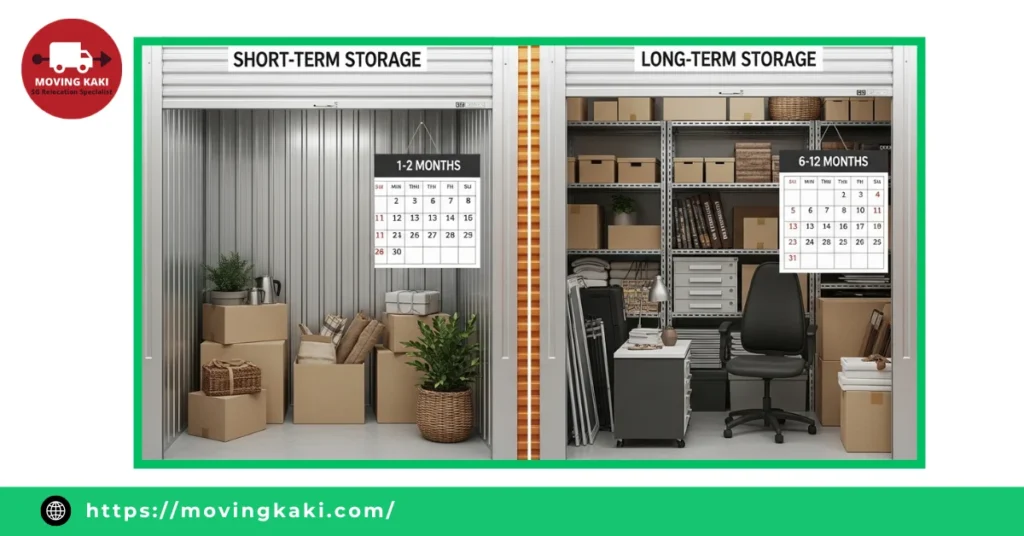
Month-to-month rentals offer flexibility but usually come with higher rates. Committing to six months or a year often unlocks discounts of 20–30% or perks like a free first month. If you expect to store items for several months, longer commitments usually reduce overall costs.
Short-term storage is especially common during home renovations, delayed move-ins, or office relocations, where items need to be stored safely for a few weeks or months.
Promotions such as “S$1 first month” or “first month free” are common but often include lock-in periods of three to six months at higher base rates. Always calculate the effective monthly cost across the entire rental period before signing.
Unsure if short-term or long-term storage works best for your needs? Check out our full guide on storage solutions in Singapore to make the choice easier.
Factors that Affect the Cost of Storage in Singapore
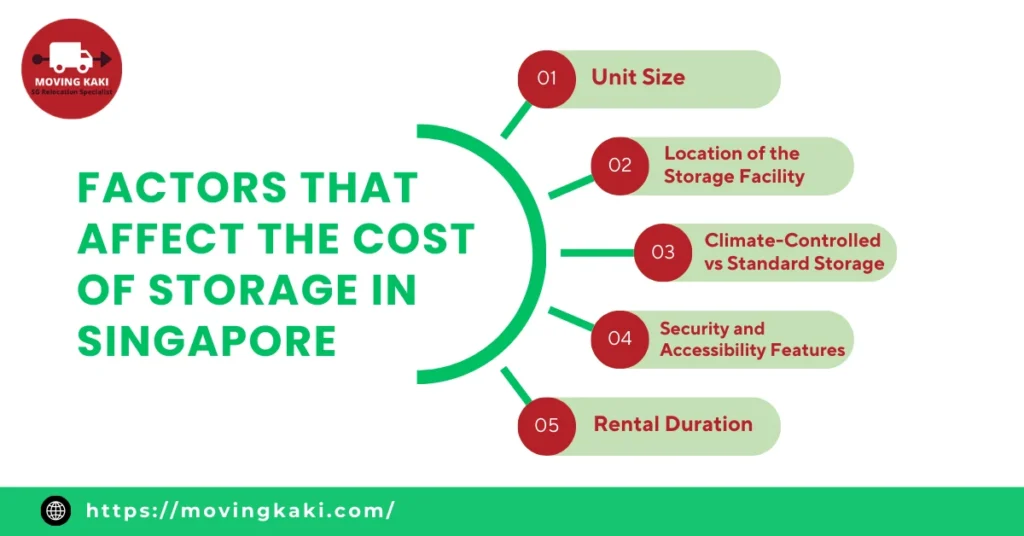
Two units that appear similar can differ significantly in price. These are the main factors that influence costs:
1. Unit Size
Larger spaces naturally cost more, but many renters overestimate how much room they need. Renting excess space is one of the most common storage mistakes. Most facilities provide sizing guides, and staff can usually help match you with an appropriate unit.
2. Location of the Storage Facility
Facilities in central areas like Orchard, Bishan, Toa Payoh, and Novena generally cost more than those in industrial zones such as Tuas, Ubi, Jurong West, or Mandai. If access is occasional, choosing a location further from the city centre can significantly reduce monthly costs.
For businesses or people in the middle of a move, proximity may be more important to ensure easy coordination.
3. Climate-Controlled vs Standard Storage
Singapore’s humidity regularly exceeds 80%. Standard storage works for durable items like tools or plastic containers, but electronics, wooden furniture, leather goods, artwork, and documents benefit from climate control.
While more expensive, it helps prevent mould, warping, and rust—especially important during longer storage periods.
4. Security and Accessibility Features
Facilities vary widely in features. 24/7 access, CCTV monitoring, keypad entry, individual alarms, and on-site security can increase monthly rates but provide important protection for valuable belongings.
5. Rental Duration
Longer commitments typically reduce monthly costs. For predictable needs like renovations or relocations, agreeing to a three- to six-month term upfront often saves money compared to flexible month-to-month rentals.
Types of Storage Available in Singapore
Choosing the right storage type matters just as much as finding the right price.
1. Self-Storage Units
The most common option. You rent a private unit, manage packing and transport yourself, and access your belongings whenever needed. It’s ideal if you want flexibility and full control.
2. Full-Service or Valet Storage
The provider handles collection, storage, and redelivery. Some services include digital inventory tracking so you can view stored items remotely. Full-service storage costs more than self-storage but removes much of the effort involved.
3. Business Storage Solutions
Many facilities provide business accounts tailored to commercial needs. Companies commonly use storage for inventory overflow, archived files, equipment rotation, and seasonal stock. Larger units in industrial areas can also function as small fulfilment hubs for e-commerce sellers.
Hidden Fees to Watch Out For
The advertised monthly rate isn’t always the final cost. Before signing, check for these extras:
Security Deposits
Many facilities require a refundable deposit equal to one or two months’ rent. While returned at the end of the lease, it’s an upfront cost worth planning for.
Insurance
Some providers require insurance, while others make it optional. Either way, coverage is worth considering since storage agreements often limit facility liability.
Transportation and Moving Costs
Transporting items to storage is often underestimated. Some facilities include move-in trucks, while others charge separately for pickups or deliveries. Bundled moving-and-storage services can sometimes be more cost-effective.
How to Choose the Right Storage Unit — and Save Money Doing It
With many providers across Singapore, choosing wisely involves more than finding the lowest price.
Estimate Your Space Honestly
List everything you plan to store and use sizing guides rather than guessing. A well-packed small unit is usually more cost-effective than an oversized one.
Compare Facilities and Look for Promotions
Prices vary widely between facilities. Promotions, discounted introductory rates, or waived admin fees can reduce annual costs significantly. Compare several providers and calculate the true monthly average before committing.
Choose Location Based on How Often You’ll Visit
If access is infrequent, industrial-area facilities typically offer better rates. A slightly longer drive matters less when visits are occasional.
Declutter Before You Store
Reducing what goes into storage directly lowers costs. Sell, donate, or discard items you no longer need before packing.
If you’re about to start packing and want to make sure you’re doing it right, check out our guide on the best ways to pack items for storage units. A few smart strategies can make the whole process much easier.
Consider Sharing a Unit
Sharing a larger unit with a neighbour or colleague can reduce individual costs. Splitting a medium unit often works out cheaper than renting two smaller spaces.
Conclusion
Storage costs in Singapore can vary widely, but the key factors are straightforward: size, location, features, and rental duration. Once you understand these, choosing the right solution becomes much easier.
However, if you’re planning a home move, office relocation, or renovation, it’s worth considering a combined moving and storage service instead of handling everything separately. This approach saves time, reduces stress, and ensures your belongings are managed professionally from start to finish.
Moving Kaki provides both moving and storage services in Singapore, making it easier to manage transitions without the hassle of coordinating multiple providers.
FAQs
1. What is the cheapest storage option in Singapore?
Small lockers are usually the most affordable option, costing around S$50–S$120 per month. Facilities in industrial areas like Ubi, Tuas, or Jurong West generally offer lower prices than central locations.
2. How do I know what size storage unit I need?
Start by listing everything you plan to store, including furniture and boxes. Use sizing guides provided by storage companies to choose the most suitable option.
3. Can I store my belongings during a home renovation?
Yes, storage is commonly used during renovations to protect furniture and create space. Many homeowners also combine moving and storage services for convenience.
4. Do I need insurance for my stored items?
Insurance is recommended because most storage providers limit liability. It helps protect your belongings against unexpected damage or loss.
5. Can businesses rent storage units in Singapore?
Yes, businesses often use storage for inventory, documents, and equipment. Companies relocating offices can benefit from combining moving and storage services.


