


Packing is one of the most important parts of moving an office, but many businesses don’t take it seriously. In a busy move, poor packing can damage items, cause delays, and even lead to the loss of important documents or equipment.
You need to pack every office item properly. Furniture, computers, files, and supplies all need different types of care. Using the right boxes and materials makes a huge difference. When you label every box clearly, it helps your whole team stay organised.
In short, good packing saves your time, reduces stress, and keeps your office items safe. Use these simple packing tips to move your office safely and efficiently.
Packing Tips for Office Relocation in Singapore
There are many tips for office relocation elaborated below
1. Make a Simple Packing Plan
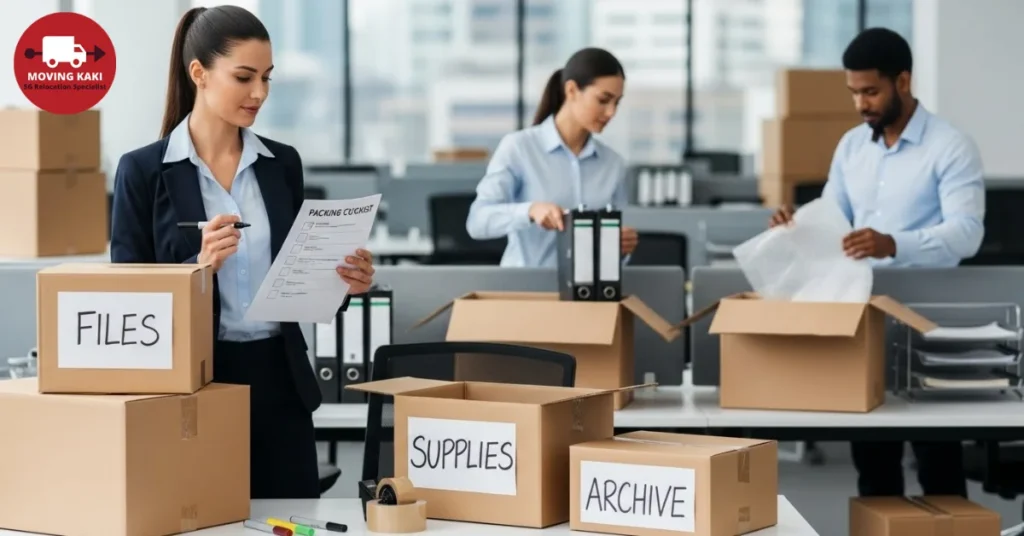
First, make a simple plan to pack your office. Write a list of everything you need to pack, room by room. Start by packing items you do not use every day, such as old books and decorations. Gather your supplies, like strong boxes, tape, and bubble wrap, before you begin. Tell each person on your team what they should pack so everyone helps. Also, pack one special box with important things you will need right away. This good plan makes packing easier, faster, and much less stressful for everyone.
2. Declutter the Office Before Packing
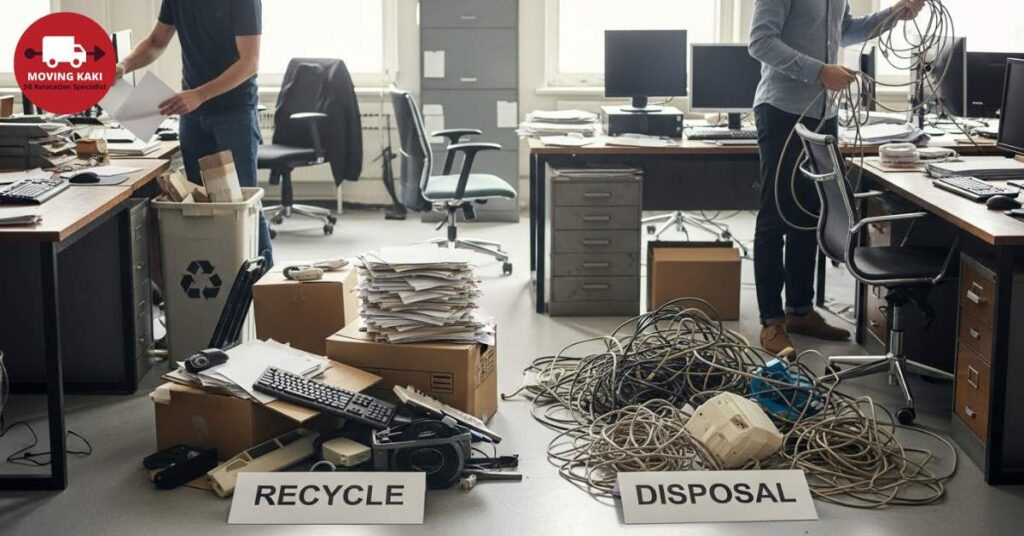
When you move your office, it’s a great time to throw away things you don’t want anymore.
Look through these types of things:
- Old papers
- Broken computers and cables
- Furniture no one uses
- Extra pens, notebooks, and supplies
If you don’t need it, throw it away or recycle it.
If an item is no longer useful, recycle or dispose of it properly. When dealing with a large amount of waste or bulky office items, using professional disposal services can make the process faster and more convenient.
3. Use Existing Office Items as Packing Materials
You don’t always have to buy new packing supplies. Look around your office first. You can use things you already have, like old files, soft cloths, towels, or unused folders. These materials
work very well to secure and protect your items. This way is better for the office, saves your company money, and keeps your everyday office things safe during the move.

4. Gather the Right Packing Supplies
Using the right packing materials protects office items during transport.
Common packing supplies for office relocation:
- Strong cardboard boxes
- Bubble wrap
- Packing paper
- Stretch wrap
- Packing tape
- Zip bags
- Markers and labels
Do not use weak or damaged boxes. Office items are heavy, and weak boxes can tear during lifting
5. Pack One Department at a Time
An organised packing process makes everything go faster and smoother. The best way is to pack everything from one department completely before you start packing the next one. Do not mix items from different teams into the same box.
Doing it this way keeps your move very structured and neat. It also means that each department can start working again almost right away in the new office.
6. Handle Office Documents with Care
Office documents are very important business records, so handle them with great care. Always use strong folders or special document boxes to keep your files safe and together. Clearly label each box with the department name and what type of files are inside.
For sensitive or confidential papers, pack them separately in their own box and keep them in a secure place. Finally, store all document boxes in a dry, well-ventilated area away from direct sunlight to prevent damage.
7. Label Every Box Clearly
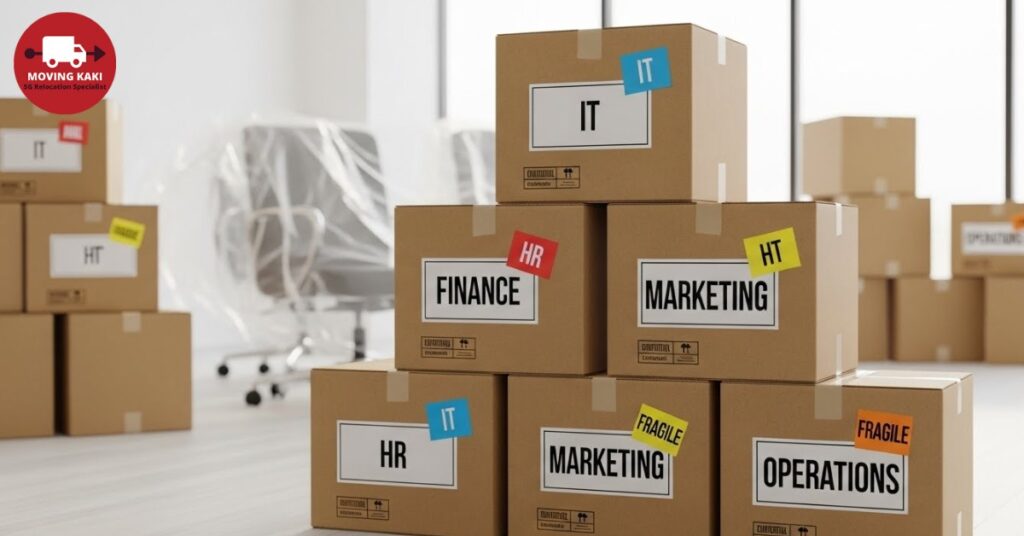
You should always mark boxes with fragile items by writing “FRAGILE” or “HANDLE WITH CARE” on them. You can also use coloured labels for different departments. For example, use a blue label for the IT department and a green one for HR. This simple colour system makes everything very organised and prevents confusion.
8. Pack IT Equipment Carefully
IT equipment is both valuable and sensitive, so it needs extra care when packing. Always secure computers, monitors, printers, and servers safely. Use bubble sheets or soft protective covers for them. If you still have their original boxes, use them because they are designed to best protect the equipment.
Make sure you do not place any heavy boxes on top of boxes containing electronics. Also, label these boxes very clearly so that the moving team knows to handle them gently. Writing “FRAGILE – IT EQUIPMENT” in big letters is a good idea.
9. Keep Cables and Accessories Together
It’s easy to lose cables and chargers when you move. To avoid that, pack them in sealed bags and label each bag with the name of the device it belongs to. Then, tape or tie the bag directly to that device. When you set up your new office, you’ll find everything right where you need it, saving you time and hassle.
10. Avoid Overloading Boxes
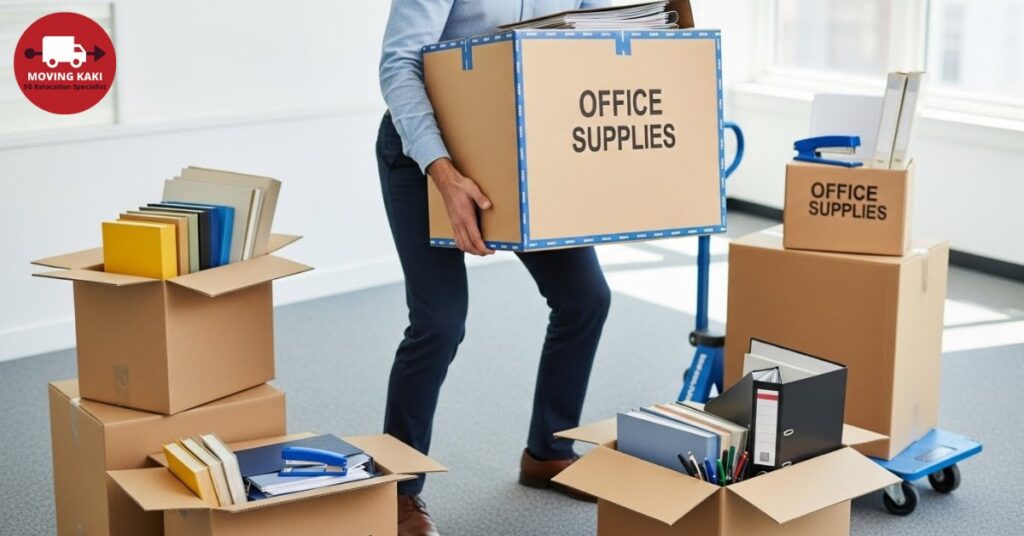
Don’t pack your boxes too full; it makes them heavy, and they might tear. Keep boxes light and easy to lift. Spread heavy things like books across different boxes so none are too heavy. And if something is really heavy, put it in a small box. This way, you won’t hurt your back, and moving is safer.
11. Pack Furniture Parts Securely
If you can, take apart office furniture like desks, chairs, and shelves before moving. Cover each piece separately to keep it safe from scratches. Put all the small parts, like screws and bolts, into labelled bags, then tape those bags right to the furniture. You’ll thank yourself later when putting everything back together is quick and easy!
12. Seal Boxes Properly
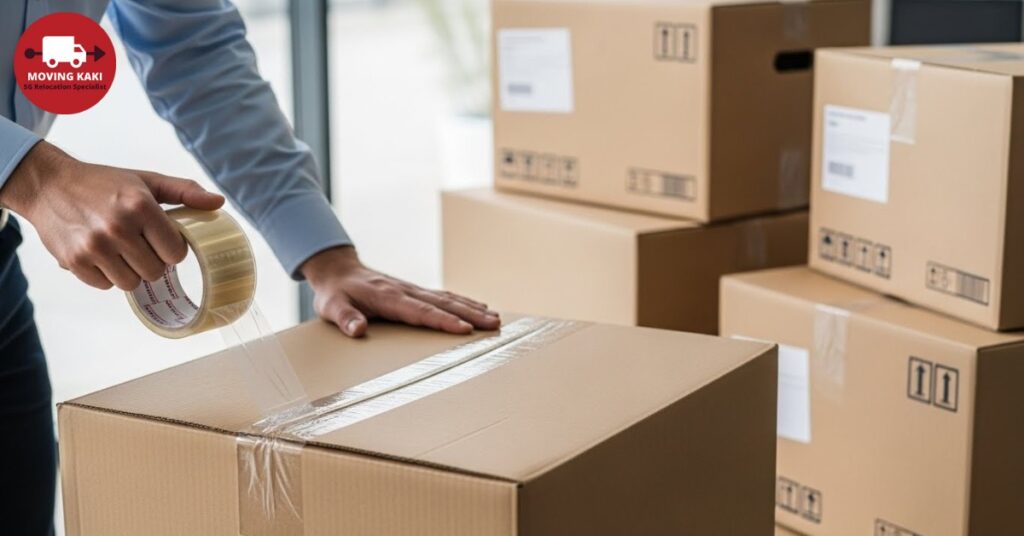
Seal each box tightly with strong packing tape. Go over the top, bottom, and every edge. For heavy boxes, add extra tape to keep them strong. This keeps everything inside safe and secure while moving.
Final Pre-Move Packing Checklist
Before you move, do one last check. Look at every box and make sure it has a clear label with what’s inside and who it belongs to. Check that fragile items are wrapped well. See that computers and electronics are safe in their boxes. Make sure all furniture screws are in labelled bags and attached to the correct furniture. Pack important papers in strong boxes and check that all boxes are tightly sealed. And finally, keep the things you use every day in a separate, easy-to-reach place.
Why Should You Hire Professional Packing Experts in Singapore
Hiring packing experts makes moving much simpler and safer. They know how to handle office furniture, electronics, and documents properly. They also understand Singapore’s building rules and what it takes to move things smoothly here.
Benefits of Professional Packing Services:
- Efficient Packing Methods: Experts use moving techniques to safeguard office assets.
- Careful Handling: Heavy and sensitive items are moved responsibly.
- Insurance Coverage: Added protection against unexpected damage.
- Reduced Downtime: Employees remain focused while experts manage the move.
- Professional packers: Make sure items remain organised, well-protected, and ready for a smooth transition.
Conclusion
Effective packing is a critical part of a successful office relocation in Singapore. By following structured packing practices, using quality materials, and maintaining clear organisation, companies can reduce disruptions and protect valuable assets.
Partnering with professional office movers and packers allows organisations to relocate confidently, minimise risks, and settle into their new workspace efficiently.
FAQs
How early should packing start before an office move?
Packing should ideally begin 2–4 weeks before the moving date, depending on office size. Early packing allows better organisation, reduces last-minute stress, and ensures essential departments remain operational until the move.
What items should be packed last during an office move?
Daily-use items, essential documents, chargers, and basic office supplies should be packed last and kept separately for easy access after relocation.
How does professional packing reduce relocation risks?
Professional packing ensures items are packed correctly using suitable materials and organised methods. This reduces the risk of damage, loss, and delays during the move.
What packing materials work best in Singapore’s climate?
Use plastic bins or waterproof boxes, especially during rainy seasons. Avoid cardboard if items are sensitive to humidity. Silica gel packets can help keep electronics dry.


