


Office furniture is a significant investment, and damage during a move can quickly turn an exciting transition into an expensive setback. Scratched desks, torn chairs, cracked cabinets, and missing parts are common problems when items are not packed or handled properly. Beyond repair costs, these issues can disrupt daily operations and delay the setup of a new workspace.
When multiple desks, chairs, cabinets, and other workplace essentials need to be relocated, even small mistakes can lead to costly setbacks. Careful preparation, suitable packing materials, and safe handling methods can go a long way towards keeping everything in good condition from start to finish.
This guide explains how to protect office furniture during a move, with practical tips for preparing, packing, transporting, and setting up workplace furnishings safely.
Tips to Protect Office Furniture During a Move
1. Plan and Assess Before Moving Day
Knowing exactly what you are moving before the day arrives prevents confusion and keeps things on track. A quick assessment at the start saves a lot of time later.
- List all desks, chairs, cabinets, meeting tables, and storage units
- Check each piece for existing scratches, dents, or loose fittings
- Take photos of anything valuable or already worn as a record
- Flag bulky, delicate, custom-made, or glass items that need special handling
- Confirm everything is accounted for before moving day begins
Having this record also protects you if any dispute comes up after the move.
2. Disassemble and Label Everything Clearly
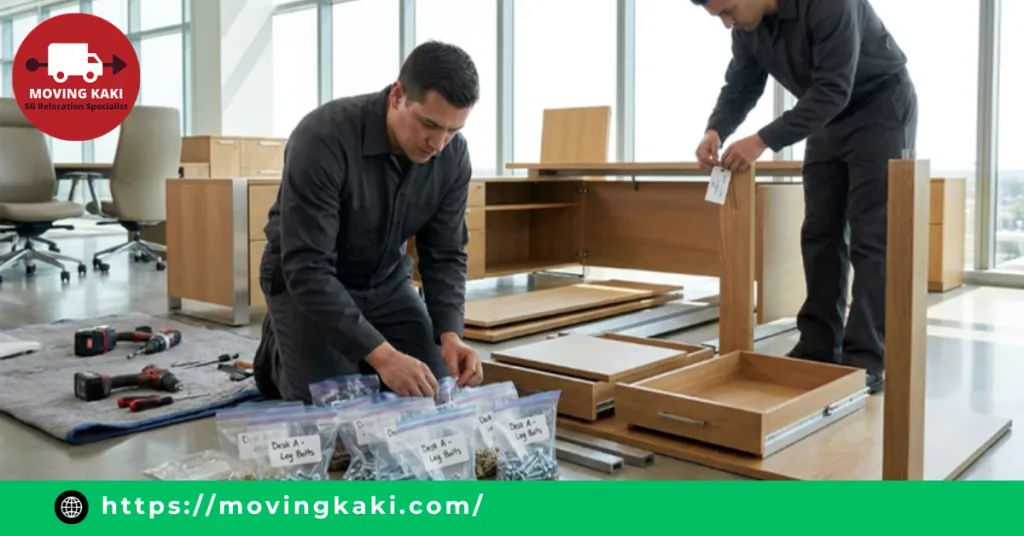
Moving large furniture in pieces is almost always safer than moving it whole. Desks, shelving units, meeting tables, and storage cabinets are far easier to handle once their detachable parts have been removed.
- Remove table legs, drawers, and any shelves that come free
- Store screws, bolts, and fittings in sealed bags and label each one clearly
- Mark larger sections when multiple components look similar
- Keep each bag of fittings with its corresponding furniture piece throughout the move
Taking this extra step at the start makes reassembly at the other end far quicker and less stressful.
3. Use the Right Packing Materials
What you wrap your furniture in makes a real difference to how it arrives. The right materials protect against surface marks, impact damage, and the general knocks that happen when things are being loaded and unloaded.
- Use moving blankets to cover large pieces like desks and tables
- Wrap exposed surfaces with bubble wrap to absorb impact
- Secure all layers with stretch film so nothing loosens in transit
- Add corner protectors to sharp edges, these are the spots most likely to chip
- Slide cardboard sheets between flat surfaces that are stacked together
Not every material suits every furniture type, so match what you use to what each piece actually needs.
4. Pack Each Piece Properly
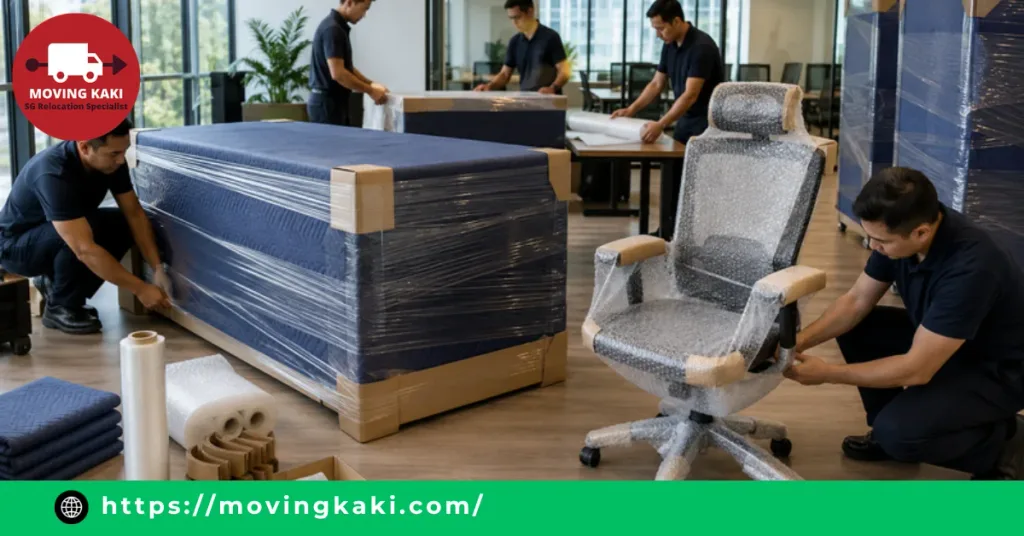
Knowing how to pack office furniture safely is what separates a smooth move from an expensive one. Once everything is covered, make sure it is wrapped tightly enough to stay that way during the move. Loose packing shifts during transport and ends up causing the exact damage you were trying to prevent.
- Wrap each piece fully so no surface is left exposed
- Reinforce corners and edges since these take the most impact
- Keep heavier items supported from the bottom to avoid imbalance
- Make sure no loose parts are left unattached before anything moves
Rushing this step is where most avoidable damage starts.
If you prefer to let professionals handle the packing, expert packing and unpacking services are available to help prepare office furniture and items so everything is properly packed, organised, and ready for transport and setup at the new location.
5. Handle and Load With Care
Even perfectly packed furniture can get damaged if it is lifted or loaded the wrong way. How you handle your furniture once it is wrapped matters just as much as the wrapping itself.
- Lift properly and never drag furniture across floors
- Use trolleys or dollies for heavy or bulky pieces
- Load heavier items first to create a stable base inside the vehicle
- Pack everything tightly so nothing shifts during the drive
- Avoid stacking fragile or unstable pieces on top of each other
Damage during transport is almost always caused by poor loading, not poor packing. Getting this right matters.
6. Protect Against Environmental Damage
Packing and careful handling get most of the attention, but the environment during a move can cause its own problems. Moisture, dust, and humidity are easy to overlook and can leave marks or cause real damage to wood and upholstered furniture.
- Keep your furniture away from rain and wet surfaces during loading and unloading
- Use covers or wraps that reduce contact with dust and dirt
- Avoid placing anything directly on wet or dirty ground
- Make sure storage or holding areas are clean and dry before putting anything down
During Singapore’s wetter months, a few minutes of extra care at this stage can prevent damage that wrapping alone will not protect against.
7. Consider Working With Professional Movers
If your office is large, your furniture is heavy, or you simply cannot afford for anything to go wrong, professional movers are worth considering. They bring the right equipment, the right experience, and organised processes that reduce both the risk of damage and the time the whole thing takes.
If you need expert help with your office relocation, Moving Kaki provides professional office moving services in Singapore. Our experienced team can assist with planning, handling, and transporting office furniture to help make the moving process smoother and more organised.
Common Mistakes That Cause Problems
Careful planning reduces most risks, but these mistakes catch people out even on well-organised moves.
- No furniture inventory: Without a list of what you are moving, things get missed and tracking down missing items after the fact is a headache. A simple written record before you start prevents this entirely.
- Not measuring access points: Large desks and meeting tables do not always fit through doorways, lifts, or stairwells. Measure both offices before moving day. This is just one item on a broader office relocation checklist that can help you avoid last-minute problems.
- Mixing up screws and fittings: When you disassemble multiple pieces of furniture, small components look identical. Keep them in labelled bags matched to their specific piece, or reassembly becomes a guessing game.
- Leaving contents inside drawers and cabinets: Moving office furniture with things still inside adds weight and shifts during transport. Empty everything out before it goes on the truck.
- Rushing the packing: Packing quickly almost always means packing poorly. Loose wrapping, exposed corners, and skipped edges are how scratches and dents happen. Slow down and do it properly.
- Forgetting attached accessories: Monitor mounts, cable management systems, and other accessories fixed to desks are easy to overlook. Remove or secure them before anything gets moved.
- Skipping the final walkthrough: Before you leave the old office, do one last check. Walk through every room and confirm that all furniture, fittings, and accessories have been loaded. It takes five minutes and prevents the kind of mistakes that are very hard to undo.
Conclusion
A successful office move comes down to how carefully each item is handled along the way. When furniture is prepared, packed, and moved with attention, the chances of damage and delays are much lower.
With the right approach, setting up your new office becomes a much smoother experience and helps you get back to work without unnecessary setbacks.
If you’re ready to make your move easier, get in touch with Moving Kaki today for a fast, no-obligation quote. Our team can discuss your requirements, answer any questions, and help you find the right solution for your business.
FAQs
1. How early should I start preparing office furniture before a move?
Starting one to two weeks out gives you enough time to inventory everything, disassemble larger pieces, and pack properly without rushing. The earlier you start, the fewer mistakes you make on the day itself.
2. Which office furniture is most likely to get damaged?
Glass tables, large meeting tables, filing cabinets, and modular workstations are the most vulnerable. They are heavier, harder to manoeuvre, and more prone to scratches and dents if not handled carefully.
3. Can I move office furniture without professional help?
For a small office, yes. For anything larger or heavier, professional movers make a real difference. They have the right equipment and know-how to handle bulky furniture safely and efficiently.
4. How do I avoid scratching floors and walls during the move?
Use furniture sliders and trolleys instead of dragging anything. Clear your pathways before you start moving and wrap sharp or heavy edges so they cannot catch on walls or door frames.
5. What should I check once everything has been moved?
Go through every piece for damage and make sure all screws, bolts, and fittings are accounted for. Reassemble carefully and check that everything is stable before you start using it again.
6. What is the best way to pack office furniture for a move?
Start by disassembling anything that comes apart, then wrap each piece fully with moving blankets and bubble wrap. Reinforce corners with corner protectors, secure everything with stretch film, and label all components clearly. Taking it section by section rather than rushing the whole lot at once makes a real difference to how everything arrives.


