

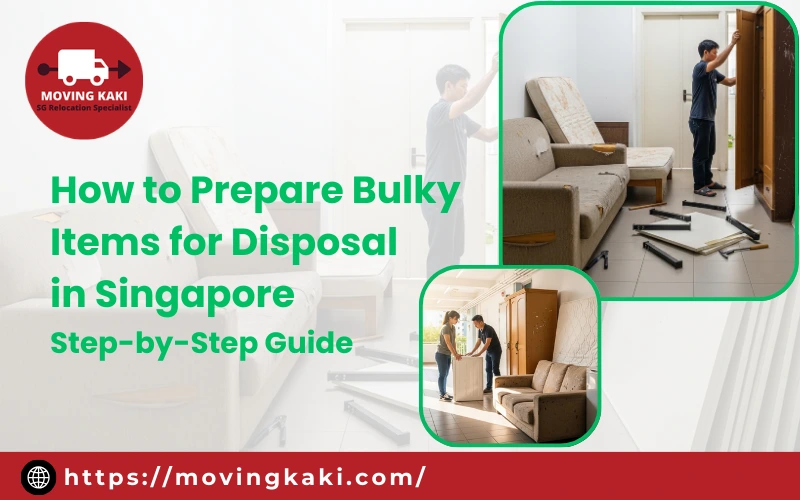
Getting rid of a bulky sofa, old mattress, or damaged wardrobe in Singapore isn’t as simple as leaving it in the corridor and walking away. Large items require proper placement, prior arrangement, and sometimes the help of professional movers; otherwise, collection may be delayed or the item left behind entirely.
In HDB estates and condominiums, shared corridors, lifts, and common areas must remain unobstructed while items are being moved out. Following the correct steps helps ensure everything is removed smoothly, without fines, neighbour complaints, or wasted trips.
This guide covers everything you need to know to clear the space and move on without the stress.
Step 1: Check If Your Item Qualifies as Bulky Waste
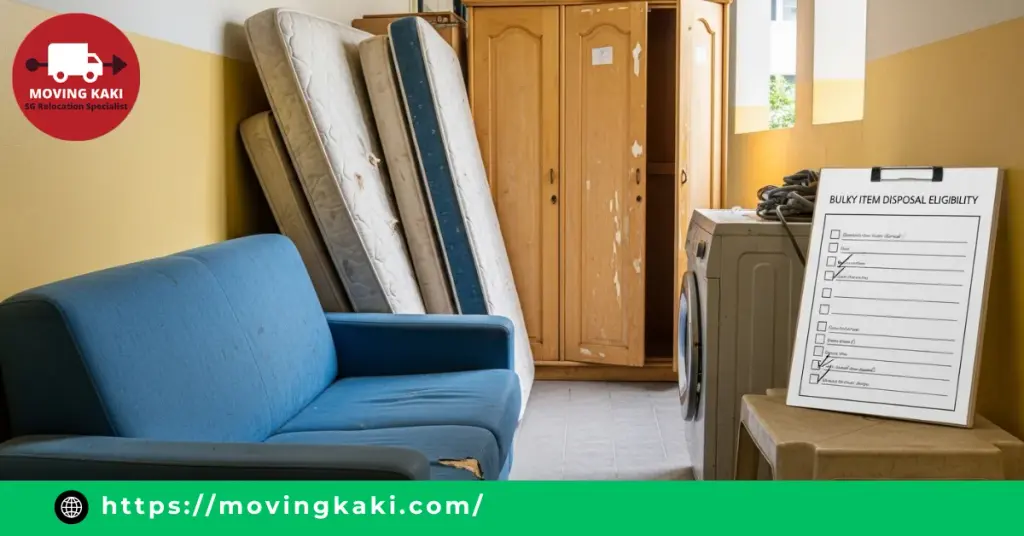
Before booking a bulky waste collection, confirm whether your item qualifies. In Singapore, bulky waste refers to large household items that cannot fit into standard rubbish bins or chutes.
Common Bulky Items:
- Sofas and armchairs
- Mattresses and bed frames
- Wardrobes and cabinets
- Dining tables
- Bicycles
- Large household appliances
According to the National Environment Agency (NEA), these oversized items require special collection arrangements to ensure safe and proper disposal.
Items That Usually Require Separate Disposal:
- Renovation debris (tiles, cement, built-in carpentry)
- Hazardous materials (paint, chemicals)
- Commercial or office waste
If you’re unsure whether your item qualifies, contact us with a photo, and our team will advise you quickly. Items such as refrigerators, washing machines, or air-conditioners may also require special handling.
Step 2: Empty and Clear Your Items Completely
One of the most often overlooked steps in bulky item disposal is making sure your items are completely empty before collection. Taking a few extra minutes to do this can save time and prevent delays.
Before disposal, make sure to remove all items from drawers, shelves, and compartments, clear bedding and linens from mattresses, and check for hidden storage spaces.
For safety and hygiene reasons, collection crews cannot remove items that still contain personal belongings. Thoroughly clearing your furniture helps avoid unnecessary back-and-forth and allows the disposal process to proceed without delay.
Step 3: Disassemble Large Furniture When Possible
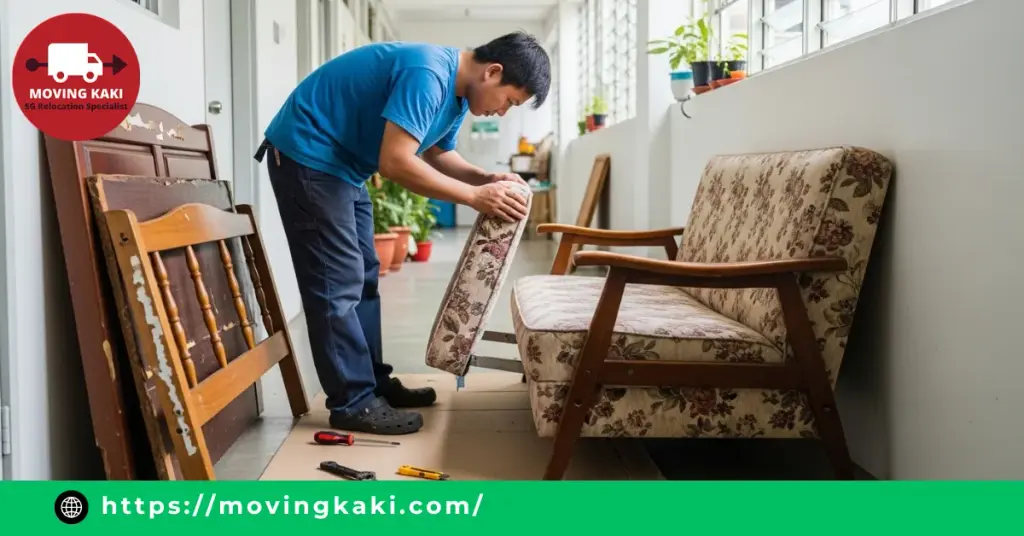
Dismantling bulky furniture can make the disposal process smoother, safer, and faster. You don’t need to take every piece apart completely, but separating major components can make a big difference.
For example, you can disassemble:
- Bed frame panels
- Table legs
- Wardrobe doors
- Sofa sections
Breaking down large items makes handling easier in lifts, corridors, and staircases, reduces the risk of damage to shared property, speeds up collection, and minimises safety risks for both you and the crew.
If an item is too heavy or difficult to disassemble safely, inform your disposal provider in advance. If you want to know how to take apart different types of furniture without causing damage, check out our guide on how to disassemble furniture safely.
Step 4: Secure Sharp or Broken Parts
Older furniture and appliances can sometimes pose hidden hazards, such as exposed nails, sharp metal edges, broken glass, or loose panels. Before disposal, take a few moments to address these. Wrap sharp edges with cardboard or protective material and tape down any loose components.
This simple step protects the collection crew, your neighbours, and anyone passing through shared corridors, lifts, or staircases.
Step 5: Place Items at the Designated Collection Point
On the day of collection, place your bulky items at the proper collection point, usually the designated bulky waste area in your block or estate. Keep fire exits, lift lobbies, and walkways completely clear.
Incorrect placement can lead to collection refusal or fines under public cleanliness regulations. If your items are exceptionally large or access is tight, inform your disposal provider in advance so arrangements can be made.
If handling bulky items feels overwhelming, Moving Kaki provides expert disposal services in Singapore that collect your items quickly and safely, so you don’t have to worry about a thing.
Why Proper Preparation Matters in Singapore
Singapore has a compact urban environment where space and safety are top priorities. The country’s waste management system is highly regulated, and most non-recyclable items are carefully processed, with ash ultimately sent to Semakau Landfill, the nation’s only landfill.
When bulky items aren’t prepared properly, it can lead to safety risks in shared areas, disrupted collection operations affecting the whole neighbourhood, unnecessary strain on Singapore’s limited waste infrastructure, and greater environmental impact on waste processing and landfill space.
Being thoughtful about how you handle bulky items supports a cleaner, safer, and more efficient community and contributes to the country’s broader sustainability efforts.
Practical Tips to Make Bulky Item Disposal Smoother
- Measure lifts and doorways beforehand to confirm that large items will fit through corridors and staircases.
- Document complicated access by photographing tight corners so your disposal provider knows what to expect.
- Clear pathways on collection day and keep hallways, staircases, and lifts free from obstacles.
- Book disposal slots early, especially if you’re moving out or coordinating with your estate’s bulky waste schedule.
Conclusion
Disposing of bulky items in Singapore is easier when approached thoughtfully. Planning ahead, understanding the requirements, and coordinating logistics help keep your home and shared spaces safe while supporting the efficiency of the local waste system.
Whether you’re clearing out after a renovation, preparing for a move, or simply decluttering, the right preparation makes all the difference. A little effort upfront saves you time, prevents complications, and keeps your estate clean and safe for everyone.
FAQs
1. How many bulky items can I dispose of with the Town Council service?
Most HDB town councils offer free bulky item removal, usually allowing each household to dispose of around two to three items per month. Restrictions vary by council, so check with yours for details.
2. Can I dispose of bulky items if I live in a condo or landed property?
The Town Council collection applies mainly to HDB flats. For condominiums or landed homes, contact your MCST or building management, or hire a licensed disposal company.
3. Where should I place my bulky items for collection?
Place items at your estate’s designated bulky waste area on the agreed collection day. Avoid corridors, lift lobbies, or fire exits, as improper placement may result in collection refusal or fines.
4. Are there items that cannot be disposed of through bulky waste collection?
Yes. Renovation debris, hazardous materials such as paint or chemicals, and certain built-in fixtures require special handling and cannot be mixed with regular bulky household waste. Always confirm with your disposal provider before booking.
5. Can I donate items instead of disposing of them?
If your furniture or bulky items are still in good condition, consider donating them to charitable organisations or listing them for reuse online. This helps reduce waste and supports sustainability efforts.


