


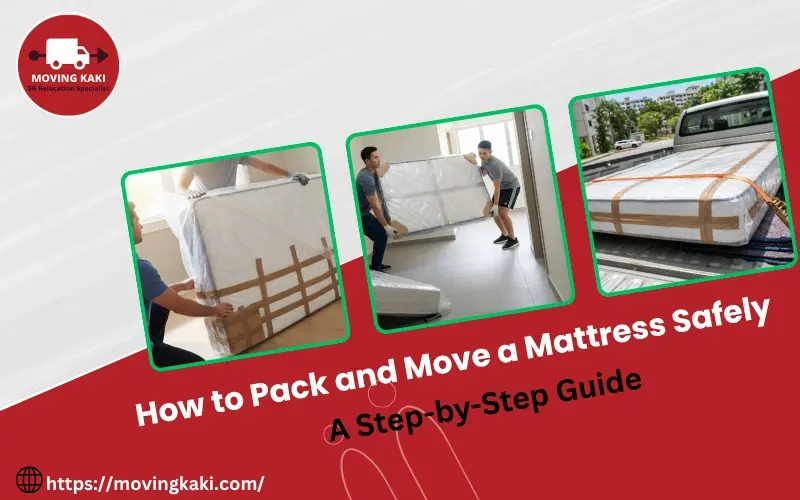
Many mattresses get damaged during a move, not because they are old or poor quality, but because they are packed incorrectly. Packing and moving a mattress safely takes a different approach from shifting a wardrobe or a dining table, since it is bulky, awkward to grip, and surprisingly easy to damage if it gets bent, dragged, or left exposed to moisture along the way.
A torn cover, a permanent fold line, or a mould patch picked up during transit are some of the most common issues that turn up after a move. Most of these trace back to avoidable mistakes: skipping a mattress bag, or trying to carry a king-size mattress without any help.
The sections below cover the right materials, a step-by-step packing process, safe lifting techniques, transport tips, and common mistakes to avoid when moving a mattress.
Why Proper Mattress Packing Matters
Protects Against Dirt, Moisture, and Damage
A mattress left unwrapped during a move collects dust, vehicle grime, and rainwater if the weather turns. Singapore’s humidity makes this worse, since a damp mattress that isn’t dried properly can develop mould within days. A sealed mattress bag or heavy-duty plastic wrap keeps it clean and dry throughout the move.
Makes the Mattress Easier and Safer to Carry
Wrapping a mattress gives it a smoother, more manageable surface to grip. Bare fabric snags on doorframes, railings, and rough walls, which slows the process down and increases the odds of dropping it. A properly bagged mattress slides more easily through tight corridors and stairwells.
Helps Maintain Mattress Shape and Warranty
Many mattress manufacturers specify handling conditions in their warranty terms, particularly around folding and exposure to moisture. Bending a memory foam mattress the wrong way, for instance, can crease the internal foam layers permanently. Following the manufacturer’s care instructions during a move helps preserve both the shape of the mattress and any warranty coverage that still applies.
What You’ll Need Before Packing a Mattress
Gathering the right mattress packing materials in advance avoids delays halfway through the process. A basic kit should include:
- A mattress bag sized to fit the mattress (single, queen, king, or custom)
- Heavy-duty plastic wrap as a backup or additional layer
- Strong packing tape
- Moving straps or a shoulder dolly for carrying
- Rope or ratchet straps for securing the mattress during transport
- A furniture dolly, useful for longer distances within a building
- Gloves for a better grip and cleaner handling
- Scissors for trimming excess plastic or tape
- Cardboard sheets, optional, for reinforcing an older or floppy mattress
Most of these items are available at hardware stores or through moving companies that sell packing supplies separately. For those who’d rather avoid sourcing materials and packing everything themselves, packing and unpacking services can take care of the entire process.
How to Pack a Mattress for Moving
Packing a mattress correctly takes a few extra minutes but prevents most of the damage that happens during a typical move. Follow these steps in order.
Step 1: Remove Bedding and Clean the Mattress
Strip off sheets, pillowcases, and any mattress protector, then pack them separately in a labelled box. Vacuum the mattress surface thoroughly to remove dust and debris, paying attention to seams and piping where dirt tends to collect. If there are visible stains, spot-clean them with a mild detergent solution before moving on.
Step 2: Let the Mattress Dry Completely
Any cleaning done needs time to dry fully before the mattress goes into a bag. Sealing in even a small amount of moisture creates an environment where mould can grow, especially over a long-distance move. A few hours near a fan or an open window is usually enough.
Step 3: Disassemble the Bed Frame
Take the bed frame apart before attempting to move the mattress itself. This clears the room, creates more space to move around, and prevents the mattress from catching on frame components as it’s moved out.
Step 4: Place the Mattress Inside a Mattress Bag
With a helper, stand the mattress on its side edge and slide the bag over it from one end. Working with a second person reduces the chance of tearing the plastic on corners or door edges during this step.
Step 5: Seal the Bag Securely
Fold over any loose plastic at the open end and tape it down firmly. For extra protection, run tape across the top, middle, and bottom of the wrapped mattress in a crisscross pattern. This keeps the bag from slipping during carrying and loading.
Step 6: Protect Corners and Edges
For an added layer of protection on a long or bumpy move, tape a folded piece of cardboard or a spare towel over each corner. Corners take the most impact when navigating stairwells and lift doors, so reinforcing them lowers the risk of tears.
Measuring Doorways, Corridors, and Lifts
Before lifting the mattress at all, measure its dimensions against the doorways, corridors, and staircases it needs to pass through. Skipping this step is one of the most common causes of delays on moving day.
In many HDB blocks, the lift is the tightest point on the route, and some older lifts are narrower than expected. Check the lift’s internal dimensions in advance, or plan a staircase move if the mattress won’t fit diagonally. For a king or queen-size mattress with a small lift, staging the wrapped mattress at the void deck while the lift makes multiple trips can save considerable time.
Clear the corridors of shoe racks, potted plants, and loose items before starting. A few minutes spent clearing the path prevents scrapes, trips, and last-minute rerouting.
How to Move a Mattress Safely
Lift with Proper Technique
Bend at the knees, not the waist, and keep the back straight when lifting. Twisting the body while holding a heavy mattress puts unnecessary strain on the spine, so pivot the feet instead of rotating the upper body.
Carry With Two People
Two people carrying a mattress can distribute the weight evenly and manage tight corners far more easily than one person working alone. One person should guide from the front while the other supports and steadies from behind, particularly on stairs.
Solo-Moving Technique
Moving a mattress alone is possible for lighter, smaller mattresses. Tilt the mattress onto its side edge and slide it along the floor using furniture sliders or a folded blanket beneath it. Resting the mattress against a wall between moves gives a chance to reposition grip without setting it flat on the ground.
Use a Dolly or Moving Straps for Heavy Mattresses
For king-size or particularly dense mattresses such as latex or hybrid models, a furniture dolly or a set of shoulder-carrying straps reduces the physical load significantly. These tools distribute weight across the body rather than concentrating it in the arms and lower back.
Best Way to Move Different Types of Mattresses
Memory Foam Mattress
Memory foam should be transported flat whenever possible. As a viscoelastic material, it slowly reshapes under pressure and doesn’t spring back immediately, which is why the foam layers can crease permanently and lose their original shape if bent. If flat transport isn’t possible, it can be stood upright for a short period, but it should never be folded. Avoid placing heavy objects on top of it during transit.
Hybrid Mattress
Hybrid mattresses combine foam layers with an innerspring core, which makes them heavier and less flexible than pure foam models. They can usually be tilted on edge briefly while moving but should not be folded at any point.
Latex Mattress
Latex is dense, heavy, and holds its shape well. Standing it upright for a short period is roughly as safe as with a memory foam mattress, so flat transport remains the better option whenever possible.
Innerspring Mattress
Innerspring mattresses have a rigid internal coil structure, so folding them is not an option regardless of the situation. They can be transported upright against a flat surface without issue, as the coils help the mattress hold its form.
How to Transport a Mattress
Moving in a Lorry or Pickup Truck
A wrapped mattress can be laid flat across the bed of a lorry or stood upright against the front wall of the cargo area. Flat positioning works well for shorter trips, while upright loading against a stable surface suits longer journeys where space is limited.
Moving in a Van
Vans typically offer better protection from weather than an open truck bed. Position the mattress along the longest interior wall and secure it so it cannot shift when the vehicle brakes or turns.
Moving on a Roof Rack
Strapping a mattress to a roof rack is sometimes used for short trips, but it exposes the mattress directly to wind, rain, and road debris. Water damage and torn plastic are common outcomes, so this method should only be considered a last resort.
Securing the Mattress During Transport
Regardless of the vehicle, use ratchet straps or tie-down rope to hold the mattress firmly in place. Padding beneath and around it reduces friction damage, and checking the straps partway through a long journey confirms nothing has loosened.
Common Mistakes to Avoid When Moving a Mattress
- Skipping the mattress bag entirely: This leaves the surface exposed to dirt, dust, and grime.
- Dragging it across flooring: Instant fabric tears and permanent scuffing follow almost every time.
- Exposing it to rain or moisture: Trapping moisture inside the plastic wrap quickly encourages mould growth in Singapore’s humidity, and once it sets in, the mattress is often beyond saving.
- Folding a rigid mattress: Innerspring or latex models aren’t built to bend.
- Scraping against sharp surfaces: Letting the mattress touch exposed screws, sharp walls, or rough concrete ruins the cover.
- Attempting a risky solo carry: A heavy queen or king mattress moved alone raises the odds of injury and dropped corners considerably.
- Transporting it upright incorrectly: Check the manufacturer’s guidelines first, since going vertical without confirming can permanently distort the shape.
- Compressing a standard mattress: Regular mattresses aren’t engineered for compression packaging and can snap.
- Over-tightening the tie-down straps: This cuts straight into the protective wrap and fabric underneath.
- Leaving it exposed to elements: Direct sun bakes the plastic and slowly damages the foam beneath it.
- Skipping route measurements: A move that starts without checking doorways, corridors, or HDB lifts almost always hits a blockage somewhere along the way.
Not every mattress needs to survive the move. If it’s old, damaged, or simply not worth the hassle of relocating, our guide on disposing of bulky items in Singapore can help you avoid the extra effort of moving something that was headed for the bin anyway.
When Should You Hire Professional Movers?
Some situations call for professional help instead of attempting the move independently:
- A king-size or extra-heavy mattress that’s difficult to manage even with two people
- A unit several floors up with narrow staircases and no functioning lift
- A move between different regions or a long-distance relocation
- A dense latex mattress that’s simply too heavy to carry safely without equipment
When independent handling starts feeling risky, Moving Kaki, a professional moving company in Singapore, brings the equipment and manpower to handle mattress and furniture moves safely from start to finish.
Conclusion
Getting a mattress from one place to another without damage isn’t complicated, it just takes a few things done in the right order: proper wrapping, full drying time, an accurate measure of the route, and a lifting or transport method suited to the mattress type. Skip any one of these, and it usually shows up later as a torn cover, a mould patch, or a permanent dent.
For heavier mattresses, tight staircases, or a full household relocation, Moving Kaki can take that part of the process off the list. Get a free quote and see what the move would actually cost.
FAQs
How much does it cost to move a mattress in Singapore?
Pricing depends on mattress size, distance, and whether disposal or dismantling services are included. A single or super single mattress typically costs less to move than a king or queen size, and requesting quotes from a few movers gives the clearest picture for a specific move.
Does moving affect a mattress warranty?
Most manufacturers do not cancel a warranty simply because a mattress has been moved. However, damage caused by improper handling, such as folding a mattress not designed to bend, can fall outside what the warranty covers. Checking the specific terms beforehand avoids any surprises later.
How long should a mattress settle before it can be slept on again?
A mattress that has been transported on its side or kept compressed for a while needs time to return to its original shape. Memory foam can take several hours, sometimes up to a full day, while latex and spring mattresses tend to recover more quickly.
Can one person move a queen or king-size mattress alone?
It’s possible but not advisable. Queen and king mattresses are heavy and awkward enough that manoeuvring them through doorways or stairwells alone raises the risk of injury or damage. Two people, or a dolly with moving straps, make the process considerably safer.
Is a mattress bag necessary, or does plastic wrap work just as well?
Heavy-duty plastic wrap can work as a substitute if a mattress bag isn’t available, provided it fully covers the mattress and every seam is taped shut. A dedicated mattress bag is generally sturdier and less likely to tear during handling.


