


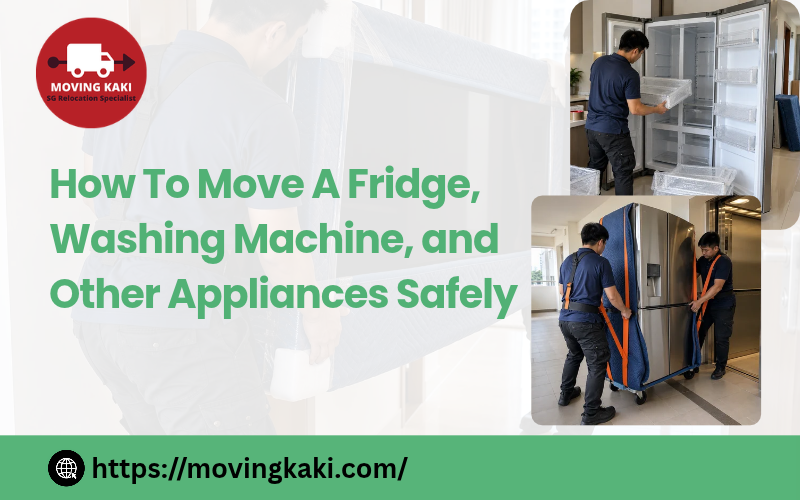
Move a fridge or washing machine the wrong way, and the damage usually doesn’t show up right away. It shows up a week later, when the compressor won’t kick in, or the washer starts sounding like it’s taking off mid-spin cycle. Knowing how to move a fridge and washing machine safely comes down to understanding what’s actually inside them.
Take the fridge first. There’s oil inside that has to stay in place to lubricate the compressor. Tilt it onto its side, and that oil migrates into the refrigerant lines. Turn it back on before the oil settles, or the compressor can fail for good. Washing machines have their own version of this: the drum sits on springs, built to move only while it’s spinning, not while it’s being carried down a staircase.
Neither appliance is actually fragile. There’s just an order to doing this right, and a bit of waiting once you’re done.
How To Move A Fridge Safely
Moving a fridge isn’t about being strong. Do things in the right order, and it’s easy: get it ready, keep it standing up, then wait a bit before you turn it on again.
- Start early, not on the morning of the move. If it has a freezer compartment, defrost it a day or two before. Wipe the inside clean and leave the doors open so it dries out. An empty, dry fridge is way lighter to carry too.
- Take everything out first. Shelves, drawers, that jar of sauce you forgot was in there. If you leave them in, they’ll bang around and crack once the fridge tips even a little. If a shelf looks like it might break, wrap it up and carry it on its own.
- Tape the doors shut before you even try to move it. A bungee cord works too if that’s what you have. A door swinging open while someone’s carrying it is how people get hurt, not just how the fridge gets scratched.
- Keep it standing up the whole time. Through the door, into the lift, onto the truck. If it has to tip on its side for a second to get round a tight corner, that’s okay. Just stand it back up right after and don’t leave it lying down longer than you have to.
- This is the part most people skip. Once it’s in its new spot, leave it standing there unplugged for at least 4 hours before you switch it on. That gives the compressor oil time to go back where it belongs, so it doesn’t start up without enough oil in it. If it was lying down for a while during the move, wait longer, closer to a full day if you’re not sure how long that was. Rushing this step is what actually costs you money, not the carrying.
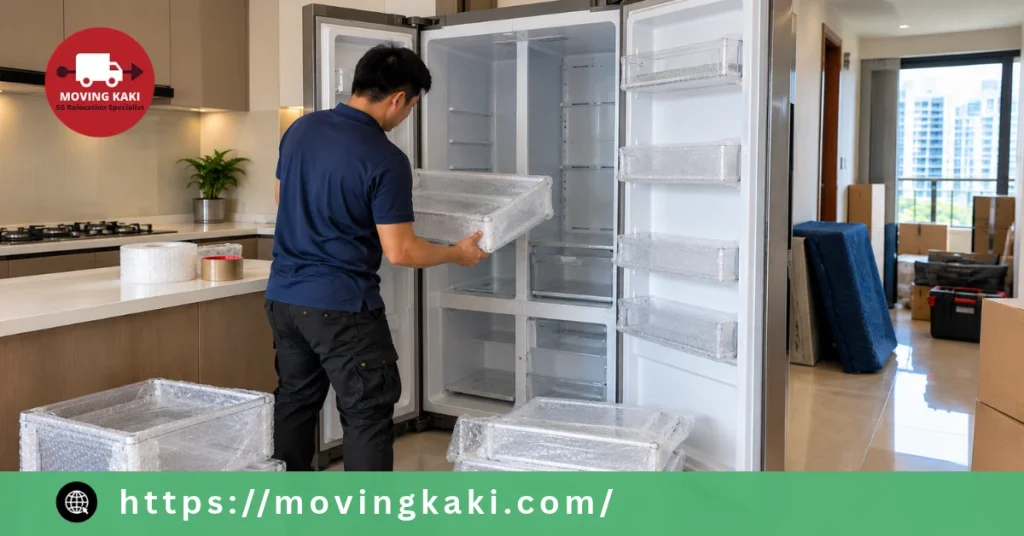
How To Move A Washing Machine Safely
A washing machine looks simple to move; it’s basically a box, but there’s a part inside that breaks easily if you skip one step.
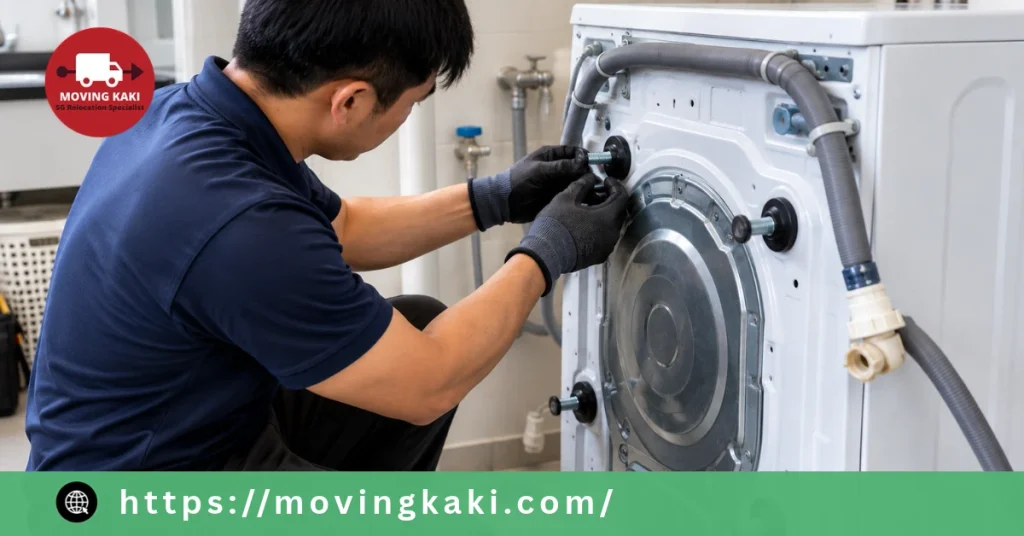
- Turn off the water and drain it out. Turn off the water supply first, then grab a bucket and set it behind the machine; there’s always a bit of water left sitting in the hose. Head round back, disconnect the water hose, and let that water drain out. While you’re at it, pull the drain hose free too and give it a second to drip out. Once both hoses are empty, go ahead and unplug the machine.
- Put the transit bolts in. These came with the machine when it was delivered, and they’re what stops the drum, the part that spins your clothes, from swinging around once it’s off the ground and being carried. Find them before you start, then check the manual for where they go, since that’s different for every brand. Skip this step and the drum bangs around loose inside the machine while you’re moving it, and that’s an expensive thing to fix.
- Tape the power cord to the back so it’s not dangling and catching on things while you carry it.
- Keep it upright and get help. Don’t try to carry a washing machine alone; it’s heavy and awkward, and you need at least two people. A trolley makes this a lot easier if you’ve got one.
- Once it’s in the new place, take the transit bolts back out before you use it. Leave them in, and you’ll damage the machine the first time it spins.
How To Move A TV, Dryer And Other Appliances Safely
Not everything in your home needs its own long list of steps. A few quick rules cover most of what’s left: the TV, the dryer, anything else heavy or easy to knock about.
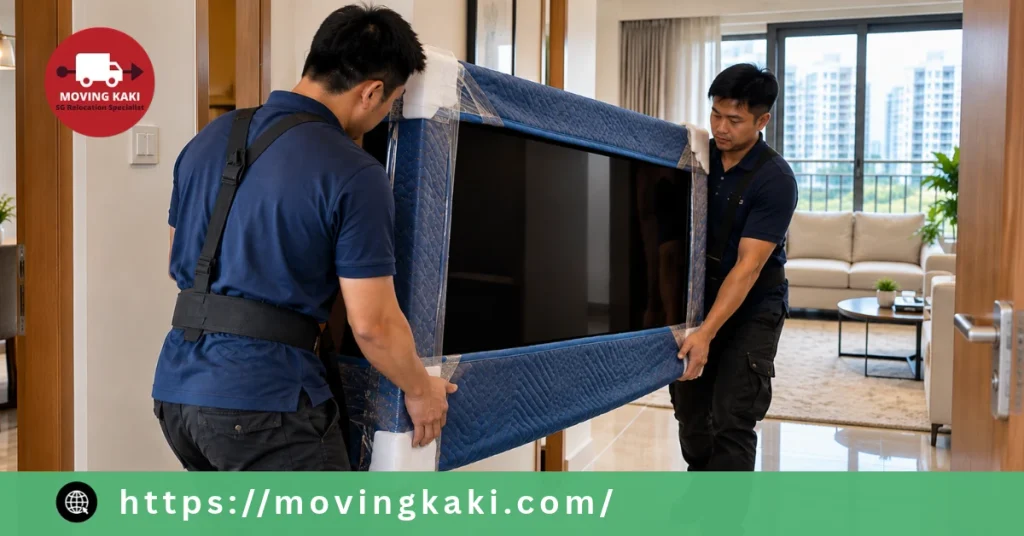
- Keep the TV standing up. Never lay a flat-screen TV down on its screen or its back panel. The screen isn’t built to hold its own weight sideways, and even a small bump can crack it. Wrap it in a blanket or use the original box if you still have it, then carry it upright the whole way, into the lift and onto the truck.
- Get two people on the TV. Even a mid-sized one is awkward to carry alone, especially through a doorway or round a corner. Carrying it solo is how corners get bumped, and screens get scratched.
- Treat the dryer like the washing machine, minus the water. It’s got the same kind of drum sitting on springs, and the same risk if that drum isn’t locked down. Check if yours takes transit bolts too; not every dryer does, and if it doesn’t, wedge a towel or blanket inside the drum so it can’t knock around during the move.
- Leave the aircon to a technician. Don’t try to unplug or move a split unit aircon yourself, the kind with an indoor unit and an outdoor compressor. It’s got gas inside that needs proper handling, and only a licensed technician is allowed to disconnect and reinstall it. Book this ahead of your move date so it’s not the thing holding everything else up.
- Everything else gets the same basic treatment. Unplug it, wrap anything with a screen or glass part, and keep it upright if it’s usually stored that way. If it’s small enough to carry in one trip, it probably doesn’t need its own checklist, just common sense and a bit of padding.
Getting Appliances Through HDB Doorways, Corridors And Lifts
A fridge that survives the packing and the driving can still get stuck at your own front door. This is the part people forget to plan for.
New HDB lifts are required to have a door opening of at least 900mm under BCA’s Code on Accessibility, though older blocks built before this standard can be noticeably narrower. A standard fridge is usually 70 to 83 centimetres wide, which fits comfortably in a new lift’s 900mm opening, but can be a tight fit in an older block that hasn’t been upgraded. Measure your lift and your doorway before you commit to a moving date, not on the day itself.
Check if your block has a service lift, sometimes called a cargo lift. It’s usually bigger than the passenger lift, and it’s the one you want for anything this size. Book it a few days ahead through your Town Council or building management; weekend slots fill up fast. When you call, have ready:
- Your block and unit number
- The date and time you need the lift
- What you’re moving, so they know the size
Confirm the booking is actually reserved, not just requested, before you finalise your moving date.
Walk the whole path once, from your front door to the lift lobby, before moving day. Clear anything sitting in the corridor, shoe racks, bicycles, delivery boxes, and check for tight turns near the lift itself. A fridge that clears the doorway but can’t turn the corner into the lift is a problem you want to find out about beforehand, not with the fridge halfway through it.
Moving Kaki’s team handles all of this, the measuring, the lift booking, the walk-through, before your move date even arrives. As part of our house moving service, we confirm the service lift booking with your Town Council directly, check the doorway and corridor widths against what’s being moved, and flag anything that needs dismantling or a different route ahead of time, so moving day itself doesn’t start with a surprise at your own front door.
DIY vs Hiring Movers For Appliances
Moving an appliance yourself is doable. It’s also easy to get wrong once, and by then the damage is done. Here’s how the two options actually compare.
| Factor | DIY | Hiring Movers |
| Cost | Free, aside from bolts, blankets, and a trolley if you don’t own one | Typically S$200toS$2,000+, depending on home size and what’s being moved |
| Effort | You do the lifting, the prep, and the waiting around after | They handle prep, carrying, and placement |
| Equipment needed | Trolley, straps, moving blankets, transit bolt manual | Brought by the movers |
| Best for | A short distance, light appliances, extra hands available | Fridges, washers, anything through a tight lift or up several floors |
If you’ve got two or three people and it’s a short move within the same block, doing it yourself is a fair call. Follow the steps above closely, and you’ll likely be fine. If you’re weighing this beyond just appliances, worth reading our full breakdown of DIY moving vs hiring movers and what’s actually right for you.
Further distances, solo moves, or a building without a service lift change the math fast. Hiring movers costs less than a cracked compressor or a fridge stuck halfway up a staircase.
Large fridges, front loaders, and anything missing its transit bolts are the appliances most likely to get damaged and the most expensive to fix. That’s worth handing to someone who does this daily.
Conclusion
None of this comes down to strength or luck. A fridge, a washing machine, even a TV, they all survive a move fine once you know the order things need to happen in and give yourself a bit of patience after. That’s really the whole idea behind moving a fridge and washing machine safely: prep first, keep things upright, then wait before you switch anything back on.
If the thought of carrying a fridge through a tight HDB corridor already has you tired, you don’t have to do it yourself. Moving Kaki moves appliances like this as part of a regular house move, and we know exactly where the transit bolts go and how long a lift booking takes to sort out. If you’d rather have a moving company in Singapore handle the fridge and washer while you deal with everything else, request a free quote and we’ll take it from there.
FAQs
Do I need transit bolts for a top-load washing machine?
Not always. Most top-loaders don’t have the same suspended drum setup as front-loaders, so they’re less likely to need bolts. Check your manual first, some models still use them, and it only takes a minute to confirm before you assume you can skip the step.
How much does a full-size fridge weigh?
Usually somewhere between 60 and over 100 kilograms, depending on size and age. That weight alone is why two people are the real minimum for carrying one, not a suggestion.
Should I unplug my fridge the night before moving day?
Ideally earlier than that. Unplug it a day or two ahead if it needs defrosting, that gives ice time to properly melt and the inside time to dry out before moving day. Unplugging it the night before usually isn’t enough time if there’s any ice buildup at all.
Is it dangerous to move a fridge myself because of the gas inside?
Not in the way people sometimes worry. A sealed fridge system isn’t something you’re handling directly, the risk is to the appliance itself if it’s tilted or switched on too soon, not to you. Aircon units are a different story, that’s where gas handling actually needs a licensed technician.
How do I get rid of my old fridge or washing machine in Singapore?
If you’re getting a new one delivered, ask the retailer to take the old unit away, most offer this free under Singapore’s e-waste takeback rules, which the National Environment Agency (NEA) oversees. You usually have to ask rather than expect it automatically. No new appliance coming? Your Town Council runs a bulky item collection service, book it online, and leave the unit at the collection point they specify, not your own doorstep, on the day.


