


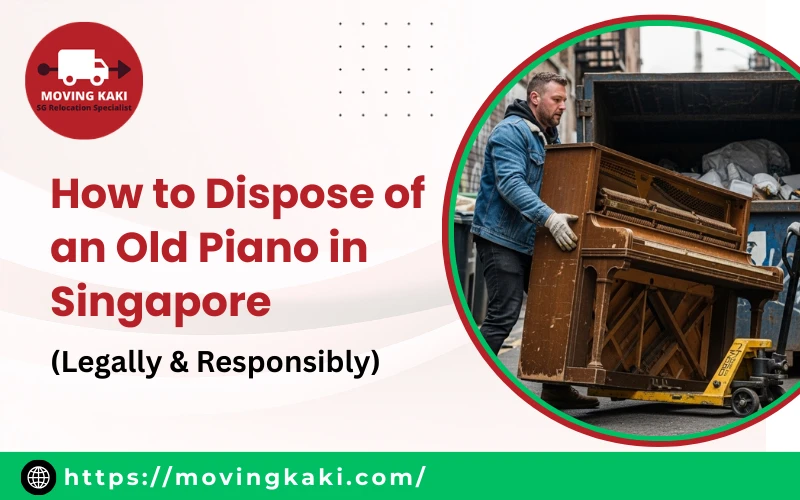
An old piano is not something you can simply throw away. It’s heavy, bulky, and difficult to move, especially in Singapore homes with narrow corridors, lifts, and staircases. Many homeowners only realise this when they try to relocate or dispose of one and find that it won’t fit through doors or cannot be moved safely.
Piano disposal comes with legal, safety, and environmental considerations. Improper dumping can lead to fines, while attempting to move a piano without the right equipment can cause serious injuries or property damage. Whether you’re renovating, downsizing, or inheriting a piano you no longer need, this guide explains how to dispose of an old piano in Singapore legally, safely, and responsibly.
Why Proper Piano Disposal Matters
Improper disposal of a piano isn’t just inconvenient; it can cause real problems:
- Safety hazards: Pianos can weigh several hundred kilograms. Mishandling can injure you or damage property.
- Legal compliance: Illegal dumping is prohibited in Singapore and may result in fines.
- Environmental responsibility: Pianos contain wood, metal, and other materials that can be recycled.
By carefully planning your piano disposal, you protect yourself, your home, and the environment.
Understanding Piano Disposal Challenges
Disposing of a piano is very different from getting rid of ordinary furniture. Pianos are heavy, awkward to handle, and built with delicate internal parts that don’t respond well to rough movement. In Singapore homes, especially apartments, these challenges become even more noticeable, which is why many homeowners rely on a professional disposal service to ensure safe and efficient removal.
Common Issues with Piano Removal
- Weight and size: Even small upright pianos can weigh over 200kg, making them unsafe to move without proper help or equipment.
- Limited access: HDB flats, narrow corridors, and tight staircases often restrict safe movement.
- Fragility: Wooden panels, strings, and internal mechanisms can be damaged easily if handled roughly.
- Climate effects: The area’s humidity can warp wood and affect exposed parts if the piano is left outdoors or uncovered.
Recognising these challenges early helps you choose a safer and more suitable piano disposal method.
Best Ways to Dispose of a Piano in Singapore
Donate Your Piano (Best for Working Pianos)
If your piano still works, donating it is often the most meaningful option:
- Schools, charities, or community centres may accept playable instruments.
- Make sure the recipient has space available and transport planned.
- Disclose any damage upfront.
Town Council Bulky Item Removal (HDB Only)
- HDB residents can schedule collection through their town council.
- Usually free, but collection may take 1–3 weeks.
- Typically limited to upright pianos.
This option is suitable for basic piano disposal when resale or donation isn’t possible.
Sell Your Piano Privately (Resale & Peer-to-Peer)
If your piano still holds value, you may be able to sell your piano in Singapore through:
- Platforms like Carousell and Facebook Marketplace.
- Appraising antique or high-value instruments before listing.
- Making safe transport arrangements for the buyer.
Selling privately can offset part of the piano disposal cost, especially for well-maintained instruments.
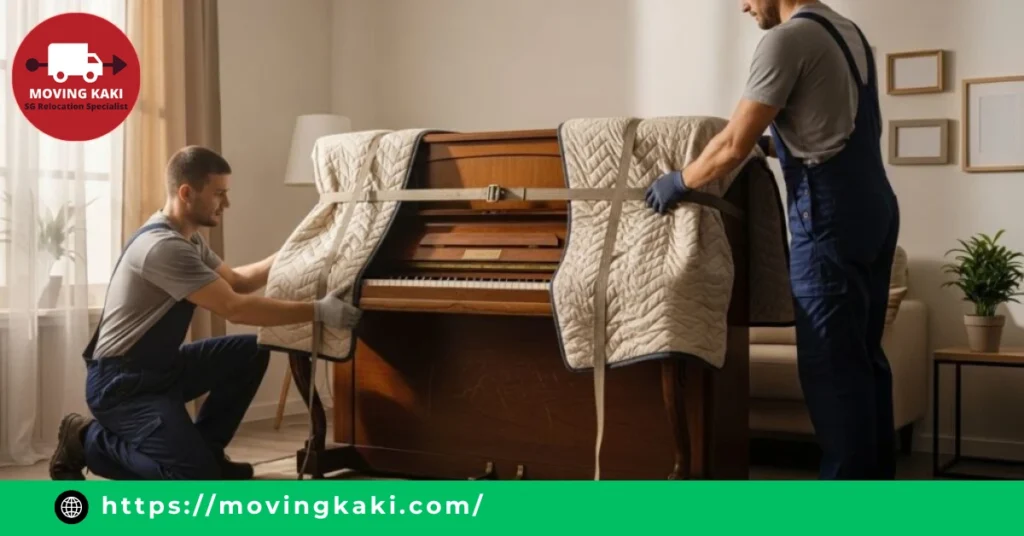
Hire a Professional Piano Removal Service
For heavy or hard-to-move pianos, professional help is often the safest route:
- A piano disposal service handles lifting, transporting, and removal.
- Ideal for large upright or grand pianos.
- Ask whether recycling or responsible disposal is included.
Recycle Through Specialised Facilities (Upcycling)
- Piano parts like wood, metal, and strings can often be recycled.
- Requires either specialised knowledge or a service provider.
- An eco-friendly option when the piano is beyond repair or reuse.
Disposal Method Comparison Table
| Disposal Method | Average Cost (SGD) | Time Required | Environmental Impact | Best For |
| Donate Piano | Free/minimal | 1–2 weeks | High | Working pianos |
| Town Council Bulky Item | Free | 1–3 weeks | Medium | Upright pianos, HDB residents |
| Sell Privately | Varies | 1–4 weeks | Medium | Resale or collectable pianos |
| Professional Removal | 150–500+ | 1–2 days | Medium | Large/grand pianos |
| Recycling / Upcycling | 100–300 | 1–2 weeks | High | Non-functional pianos |
Preparing Your Piano for Disposal
Steps to Prepare for Removal
- Measure access points: Check doors, lifts, and corridors.
- Remove detachable parts: Pedals, legs, and lids make moving easier.
- Protect floors and walls: Use mats or blankets to prevent scratches.
- Secure fragile elements: Tape keys or wrap delicate parts.
- Consider climate: Keep the piano dry and avoid leaving it exposed to humidity.
Good preparation reduces risks when working with a piano-moving team or a removal service.
Common Mistakes to Avoid
- Trying to move the piano alone.
- Ignoring HDB or town council regulations.
- Underestimating the piano’s weight or awkward shape.
- Leaving the piano exposed to rain or high humidity.
- Overlooking resale or donation opportunities before disposal.
Conclusion
Letting go of an old piano in Singapore requires more thought than disposing of everyday furniture. Its size, weight, and construction mean the process must be handled carefully and in line with local rules. Taking time to assess the piano’s condition and your home’s layout helps determine whether donation, resale, council collection, recycling, or a professional piano disposal service is the most practical solution.
With proper preparation and an understanding of common risks, piano disposal becomes far more manageable. When handled responsibly, an unwanted piano can be removed, reused, or recycled in a way that suits your situation while minimising impact on both your home and the environment.
If you prefer to leave the heavy lifting to professionals, don’t hesitate to reach out to Moving Kaki, a trusted moving company in Singapore. With years of experience, their team can handle your move safely and responsibly, giving you peace of mind throughout the process.
FAQs
1. Can HDB residents dispose of pianos via the town council’s bulky item collection?
Yes, usually only upright pianos are accepted. Book a collection in advance through your town council.
2. How much does piano disposal cost in Singapore?
The piano disposal cost typically ranges from SGD 150 to 500 when using professional services, depending on size and access.
3. Are there organisations that accept piano donations?
Schools, charities, and community centres may accept working pianos. Always check transport requirements.
4. Can piano parts be recycled in Singapore?
Yes, wood, metal, and strings can often be recycled, but specialised services may be required.
5. Is it safe to move a piano on my own?
Only small upright pianos with multiple helpers should be attempted. Professionals should always move large or grand pianos.


