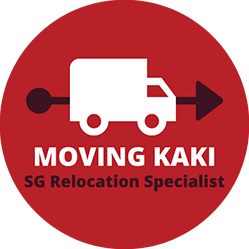


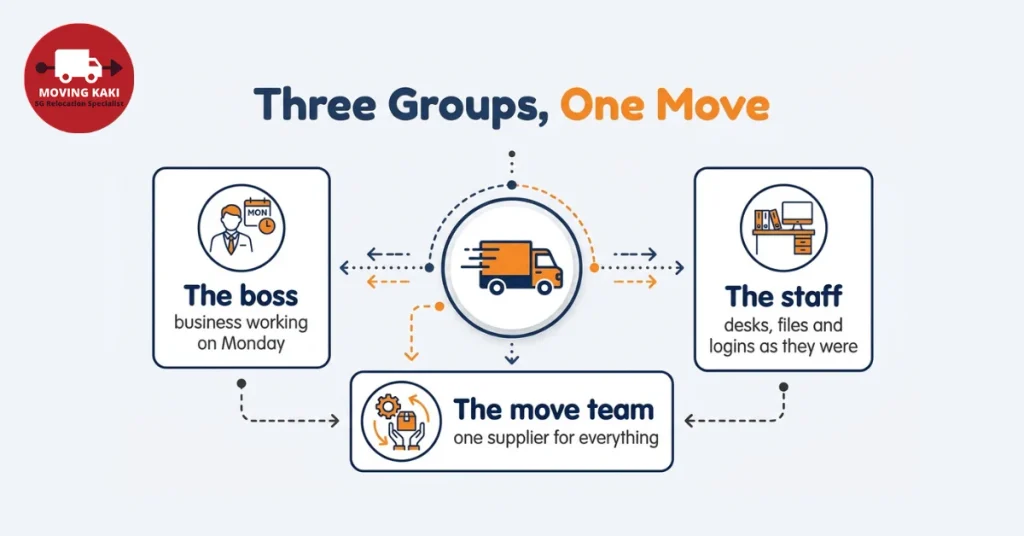
Choosing an office mover means keeping three groups happy at once. The boss wants the business working on Monday. The move team wants one supplier who handles everything. And the staff want their desks, files and logins exactly where they left them.
The best office movers in Singapore manage all three. The wrong one can cost you a day of work, a damaged server or a dispute with building management.
Here’s how to find the best office movers in Singapore, step by step, from shortlisting companies to comparing quotes and scoring them side by side.
What Separates Office Movers From House Movers
Many Singapore movers do both, and that’s fine. What matters is whether they’ve moved offices like yours, because the job differs in a few key ways.
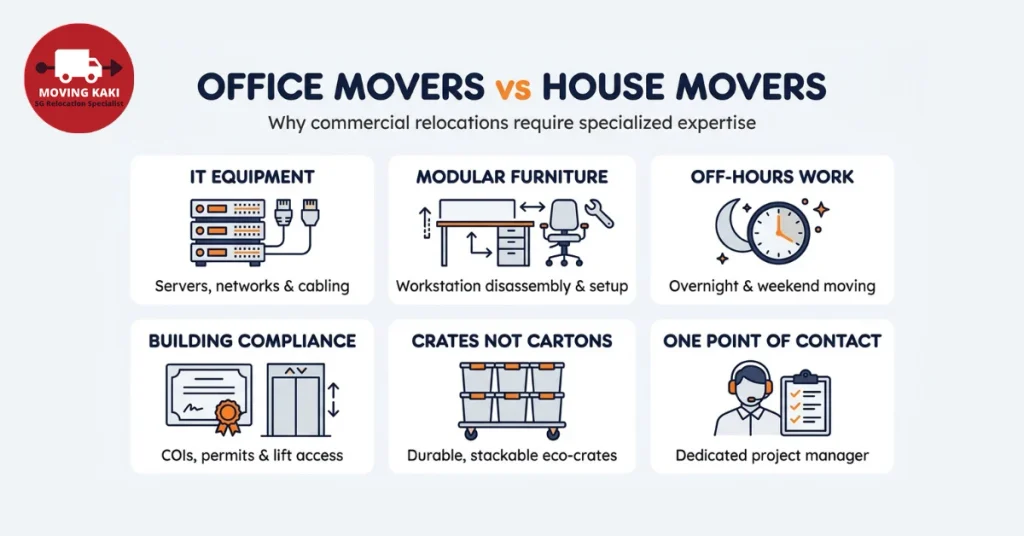
- IT equipment: Servers, switches, monitors, and printers need anti-static wrapping, labelled cables, and someone who knows the correct disconnection order.
- Modular furniture: Workstations, partitions, and filing systems must be disassembled and reassembled correctly, often according to a supplier’s layout.
- Off-hours work: Most office moves happen after 6 pm, overnight or at weekends, so the mover needs crews who work those hours.
- Building compliance: Commercial buildings require a certificate of insurance, loading bay bookings, and lift protection. An office mover sorts these out with management; a house mover may not know to ask.
- Crates, not cartons: Good office movers rent out plastic crates that stack, lock and can be numbered by desk, which is faster and more secure than cardboard.
- One point of contact: Larger moves need a project manager to plan the sequence, run the crew on the day, and handle problems.
The best commercial moving company for you can adapt to your business. That might mean packing a lab, moving one department a weekend at a time, or setting up the network before staff arrive.
If you’re still planning the move itself, start with our office relocation checklist for Singapore businesses.
How To Find The Best Office Movers In Singapore: Shortlist And Check
Aim for a shortlist of three to five companies, then narrow it to three for site surveys. These checks take an afternoon.
1. Ask around first
Other business owners, your landlord and the building management office are the best sources. Building managers see movers come and go every week, and they usually know which crews follow the rules and which ones leave scuffed lifts behind.
2. Read reviews from businesses, not just households
On Google, look for reviews that mention office or commercial moves. Read the most recent ones first, and look for patterns: punctuality, care with equipment, and how they handled problems. One bad review is normal. The same complaint five times is a warning.
3. Check the company is real and established
Look the company up on bizfile.gov.sg to confirm it’s registered with ACRA and see how long it has been operating. A physical address and its own trucks are good signs. A mobile number and nothing else is a red flag.
4. Check the insurance properly
For an office move, ask about three kinds of cover:
- Goods in transit, for damage to your furniture and equipment
- Public liability, for damage to the building, lifts or third parties
- Work injury compensation, for the crew
Ask for the claim limit in writing. Most commercial buildings will also want a certificate of insurance before the crew is allowed in, so check the mover can issue one quickly.
5. Ask for a reference from a similar office
Ask for one or two recent clients with an office your size, and call one. Ask whether the move finished on time, whether anything was damaged, and whether they’d hire the same mover again.
6. Test how they communicate
Send each company the same email with a few questions. How fast they reply, and how clearly, is a good preview of how they’ll handle the move.
Questions Only Office Movers Can Answer Well
The usual questions about registration, fixed prices and extra charges still apply; here’s our full list of questions to ask before hiring a moving company. For an office, add these:
- How many offices our size have you moved in the last year?
- Who disconnects and reconnects the IT, you or our IT provider?
- Do you rent crates, and are they included in the quote?
- Can you issue a certificate of insurance for both buildings, and how fast?
- Do you charge extra for after-hours, overnight or weekend work?
- Will one person manage the move from survey to set-up?
- Can you move us in phases, one department at a time?
- What happens if the move runs past the building’s permitted hours?
Why The Site Survey Matters
No serious office mover should quote without seeing the office, in person or by video. The survey is where they count the workstations, see the server room, check the loading bay and lift sizes, and spot the boardroom table that won’t fit through the door.
A quote given without one is a guess. Expect it to change on the day, usually upwards.
What An Office Moving Quote Should Include
Ask all three movers to quote the same scope, broken down line by line. A good quote lists:
For typical price ranges by office size, see our guide to office moving costs in Singapore. Book your chosen mover 1 to 2 months ahead, longer if you need a weekend slot at a busy time of year.
Compare Your Final Three Office Movers With A Scorecard
Score each mover from 1 to 5 on each line, multiply by the weight, and add up the totals. Price matters, but it’s only one line.
The highest total usually isn’t the cheapest quote. It’s the one least likely to cost you a day of lost work.
Red Flags: What To Look For In A Commercial Mover, And When To Walk Away
Knowing what to look for in a commercial mover also means knowing what should end the conversation. Walk away if a mover:
- Won’t do a site survey before quoting
- Can’t issue a certificate of insurance for your building
- Gives vague answers about who handles your IT equipment
- Has no crews for evenings or weekends
- Plans to subcontract the whole job without telling you who’s coming
- Asks for a large deposit before any work is done
- Sends a one-line quote with no breakdown
- Can’t name a single office client you could call
Conclusion
The right mover treats your office move as a project, not a truck booking.
To find the best office movers in Singapore, shortlist candidates through referrals and business reviews, check insurance and registration, insist on a site survey, and compare itemised quotes against the scorecard above. Price matters, but downtime usually costs more.
If you want a crew that handles IT equipment, after-hours work, and building approvals as standard, our office movers in Singapore start every job with a free site survey.
Request a free office moving quote
Frequently Asked Questions
How far in advance should I book office movers?
One to two months ahead is usually enough for a small or medium office. Book earlier if you need a weekend or overnight slot near year-end, or if you’re moving more than one floor.
Can office movers handle servers and IT equipment?
Experienced ones can wrap, crate and transport them safely. Many offices still ask their IT provider to disconnect and reconnect servers, while the movers handle the physical move. Agree who does what before you sign.
How do I keep downtime to a minimum?
Move after office hours or over a weekend, get the internet live at the new office first, and plan a phased move if the business can’t close at all. Ask staff to work from home on the day.
Are there hidden costs with office movers?
Common extras include after-hours surcharges, crate rental, stair or long-carry charges, and extra packing materials. An itemised quote after a site survey should show all of them upfront.
Should I use the mover my building recommends?
It’s worth getting a quote from them, since they’ll know the building’s rules and loading bay. Still compare them against two others on the same scope. A recommendation isn’t a guarantee of the best price or service.


